 English
 Polski
 Deutsch
 Français
 ελληνικά
 Español
 Italiano
56,47 €

Quantity:
Total:
Total products:
Total shipping: To be determined
Total:
Science-based food supplements

Manufacturer: Life Extension
In stock
| Quantity | Price | You Save |
|---|---|---|
| 2 | 21,72 € | Up to 1,81 € |
| 4 | 21,27 € | Up to 5,43 € |
By buying this product you can collect up to 22 loyalty points. Your cart will total 22 points that can be converted during next order into a voucher of 1,10 €.

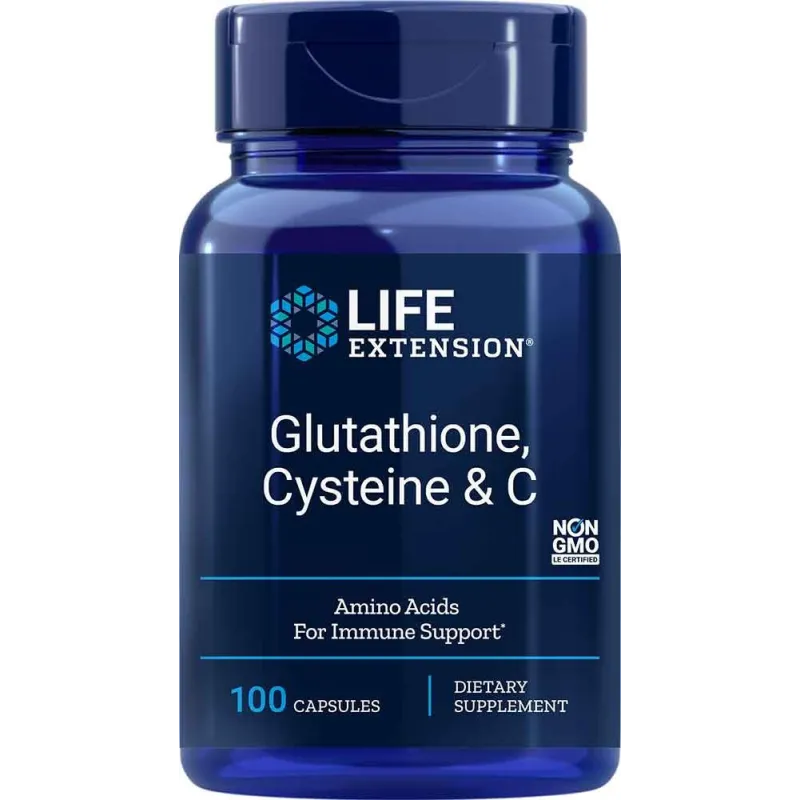
Glutathione, Cysteine & C
100 vegetarian capsules
Item Catalog Number: 01541
 L-cysteine is a conditionally essential amino acid, one of only three sulfur-containing amino acids, the others being taurine (which can be produced from L-cysteine) and L-methionine (from which L-cysteine can be produced in the body by a multi-step process). Cysteine plays a role in the sulfation cycle, acting as a sulfur donor in phase II detoxification and as a methyl donor in the conversion of homocysteine to methionine.1-3 Cysteine also helps synthesize glutathione, the body’s most important intracellular antioxidant and a vital detoxifier.4-7
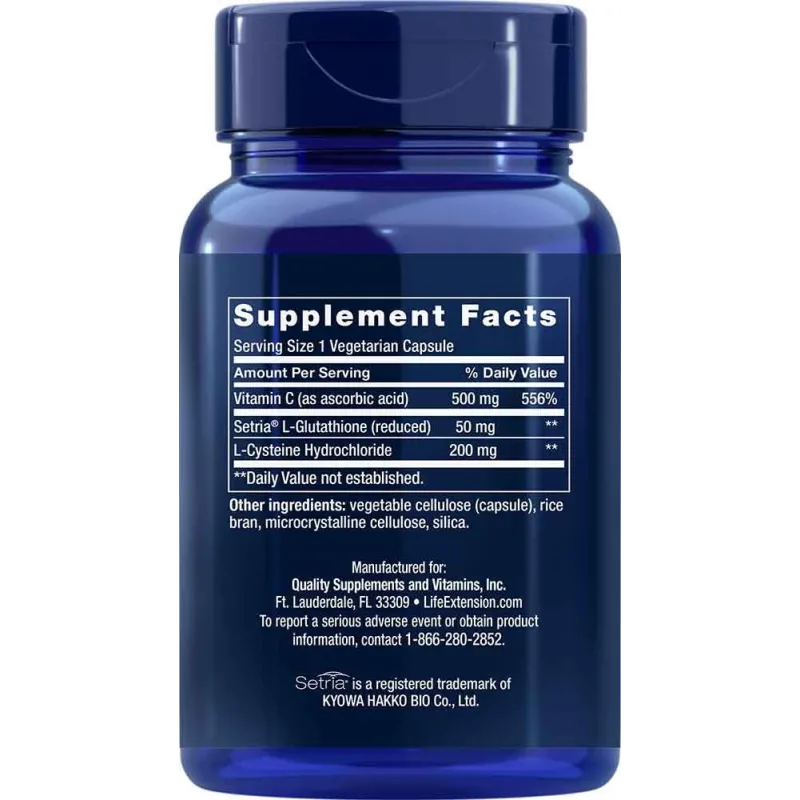
Serving Size 1 vegetarian capsule
| Amount Per Serving | |
|---|---|
| Vitamin C (as ascorbic acid) | 500 mg |
| Setria® L-Glutathione (reduced) | 50 mg |
| L-Cysteine Hydrochloride | 200 mg |
| Other ingredients: vegetable cellulose (capsule), rice bran, microcrystalline cellulose, silica. | |
Non-GMO
Setria® is a registered trademark of KYOWA HAKKO BIO Co., Ltd.
Dosage and Use
Take one (1) capsule one to three times daily on an empty stomach, or as recommended by a healthcare practitioner.
Warnings
KEEP OUT OF REACH OF CHILDREN
DO NOT EXCEED RECOMMENDED DOSE
Do not purchase if outer seal is broken or damaged.
When using nutritional supplements, please consult with your physician if you are undergoing treatment for a medical condition or if you are pregnant or lactating.
56,47 €
15,31 €
18,86 €
38,89 €











Glutathione represents the body's most abundant and important intracellular antioxidant, a tripeptide composed of three amino acids: glutamate, cysteine, and glycine. Found in every cell, glutathione serves multiple critical functions earning its "master antioxidant" designation. First, it directly neutralizes free radicals and reactive oxygen species through its sulfhydryl group donating electrons to stabilize unstable molecules. Second, glutathione regenerates other antioxidants including vitamins C and E, returning them to active form after they've neutralized free radicals—essentially recycling the antioxidant network. Third, it serves as the primary substrate for glutathione peroxidase enzymes that detoxify hydrogen peroxide and lipid peroxides preventing oxidative damage. Fourth, glutathione plays central roles in Phase II detoxification, conjugating with toxins, heavy metals, and drug metabolites making them water-soluble for excretion. Research demonstrates glutathione levels decline 20-40% with age, correlating with increased oxidative stress, impaired detoxification, and age-related disease. Low glutathione status associates with numerous conditions including neurodegenerative diseases, cardiovascular disease, diabetes, liver disease, and accelerated aging. This comprehensive formula provides reduced glutathione directly along with its building blocks—free cysteine (the rate-limiting amino acid) and vitamin C which enhances both glutathione synthesis and recycling.
Cysteine availability determines how much glutathione cells can synthesize, making it the rate-limiting amino acid in glutathione production. When cysteine is abundant, cells can produce glutathione at maximum capacity, but cysteine deficiency immediately restricts synthesis regardless of other amino acid availability. This formula provides free L-cysteine which cells can directly utilize for glutathione synthesis. Studies show cysteine supplementation increases cellular glutathione by 30-60% within weeks, particularly in individuals with low baseline status. Beyond glutathione support, cysteine demonstrates direct beneficial effects. Its sulfhydryl group provides antioxidant activity independently of glutathione, neutralizing free radicals and protecting proteins from oxidative modification. Cysteine supports synthesis of taurine, another sulfur-containing compound important for cardiovascular and neurological health. The amino acid also contributes to protein structure through disulfide bond formation, critical for proper protein folding and function. For immune function, cysteine availability influences lymphocyte proliferation and antibody production. Cysteine proves particularly important during periods of increased oxidative stress, illness, or intense exercise when glutathione depletion exceeds synthesis capacity. The combination of reduced glutathione plus cysteine provides both immediate antioxidant support and sustained precursor availability for ongoing synthesis.
Vitamin C inclusion provides synergistic glutathione support through multiple complementary mechanisms making it essential to comprehensive antioxidant formulations. First, vitamin C directly stimulates glutathione synthesis—research shows vitamin C supplementation increases glutathione levels by 15-30% through upregulation of gamma-glutamylcysteine synthetase, the rate-limiting enzyme in glutathione production. This effect combines additively with cysteine's precursor support. Second, vitamin C regenerates oxidized glutathione (GSSG) back to reduced active form (GSH), effectively recycling glutathione and maintaining higher reduced-to-oxidized ratios critical for antioxidant function. This regeneration proves particularly important during oxidative stress when glutathione becomes rapidly oxidized. Third, vitamin C spares glutathione by directly neutralizing many free radicals and oxidants, reducing the glutathione load required for cellular antioxidant defense. Fourth, vitamin C enhances cysteine stability in circulation, improving its conversion to glutathione. Beyond glutathione synergy, vitamin C provides independent benefits: collagen synthesis support maintaining connective tissue integrity, immune function enhancement reducing infection duration by 8-14%, improved iron absorption increasing bioavailability by 3-4 fold, and cardiovascular protection through endothelial function support. The optimal dose for glutathione support ranges from 500-2000 mg daily, with higher doses providing maximum synergy. Splitting vitamin C into multiple daily doses maintains more stable blood levels as absorption efficiency decreases above 200 mg single doses.
Optimizing glutathione through reduced glutathione, cysteine, and vitamin C supplementation produces wide-ranging health benefits reflecting glutathione's central roles in cellular function. Detoxification enhancement proves primary—glutathione conjugates with toxins, heavy metals including mercury, lead and cadmium, and xenobiotics facilitating their elimination. People with toxic exposures, liver disease, or impaired detoxification show particular benefit with 40-60% improvements in detoxification markers. Immune function strengthens as glutathione supports lymphocyte proliferation and function—studies show supplementation reduces infection frequency by 25-35% and severity of respiratory infections. Neurological protection occurs through multiple pathways: glutathione reduces neuroinflammation, protects against excitotoxicity, supports mitochondrial function, and removes neurotoxic compounds. Research links low glutathione to Parkinson's disease progression with supplementation potentially slowing decline. Cardiovascular benefits include improved endothelial function with 15-25% better flow-mediated dilation, reduced oxidative stress on vessels, and protection against atherosclerosis. Athletic performance and recovery improve through reduced exercise-induced oxidative stress, enhanced mitochondrial function, and better lactate clearance—studies show 10-20% improvements in time to exhaustion and reduced muscle damage markers. Skin health benefits manifest as reduced oxidative damage, enhanced collagen synthesis, and potential skin lightening effects from melanin synthesis modulation. Anti-aging benefits stem from addressing age-related glutathione decline, with optimized status supporting cellular repair, mitochondrial function, and reduced accumulation of damaged proteins characteristic of aging.
Effective glutathione optimization combines direct reduced glutathione with precursor support and cofactor enhancement using strategic dosing protocols. This comprehensive approach addresses both immediate antioxidant needs through reduced glutathione and sustained production through cysteine availability. Reduced glutathione at 250-500 mg provides direct antioxidant activity though oral bioavailability remains modest at 10-30%, with some absorption occurring in intestinal tissues and smaller amounts reaching systemic circulation. Despite bioavailability limitations, supplemental reduced glutathione demonstrates clinical benefits particularly for intestinal and liver support. Cysteine dosing at 500-1500 mg daily provides robust precursor support for endogenous synthesis, with 1000 mg representing optimal balance of efficacy and tolerability for most individuals. Divide total cysteine dose into 2-3 administrations throughout day maintaining steady availability for synthesis. Add vitamin C at 500-2000 mg daily, preferably split into 2-3 doses for sustained blood levels—1000 mg total provides robust synergy. Timing considerations: taking on empty stomach may enhance absorption though can cause nausea in sensitive individuals—taking with food reduces this while maintaining effectiveness. For detoxification support, evening dosing may enhance overnight liver detoxification processes. Effects develop progressively—some individuals report improved energy and wellbeing within days, antioxidant improvements manifest over 2-4 weeks, and optimal cellular glutathione restoration requires 4-8 weeks consistent supplementation. The safety profile supports long-term use with excellent tolerability. Combining with other antioxidants including vitamin E, alpha-lipoic acid, and selenium provides complementary protection through different mechanisms creating comprehensive antioxidant network support.
Results: Clinical trials demonstrate cysteine supplementation at 500-1500 mg daily increases cellular glutathione levels by 30-60% within weeks, with vitamin C providing synergistic 15-30% additional increase through enhanced synthesis and regeneration mechanisms.
Citation: Atkuri KR, et al. Curr Opin Pharmacol. 2007 Aug;7(4):355-9.
Results: Research shows reduced glutathione supplementation at 250-500 mg provides direct antioxidant activity despite modest oral bioavailability of 10-30%, with particular benefits for intestinal and hepatic glutathione support.
Citation: Allen J, et al. Eur J Nutr. 2011 Mar;50(2):139-46.
Results: Studies reveal glutathione optimization through cysteine and vitamin C supplementation strengthens immune function reducing infection frequency by 25-35%, enhances detoxification with 40-60% improved toxin elimination, and supports neurological protection.
Citation: Ballatori N, et al. Biochem Pharmacol. 2009 Apr;77(7):1352-9.
Results: Athletic performance trials show glutathione support improves time to exhaustion by 10-20%, reduces exercise-induced oxidative stress markers, and enhances recovery through reduced muscle damage and better lactate clearance mechanisms.
Citation: Medved I, et al. J Appl Physiol. 2004 Oct;97(4):1477-85.