 English
 Polski
 Deutsch
 Français
 ελληνικά
 Español
 Italiano
23,76 €

Quantity:
Total:
Total products:
Total shipping: To be determined
Total:
Science-based food supplements

Manufacturer: Life Extension
Waiting for delivery
| Quantity | Price | You Save |
|---|---|---|
| 2 | 38,22 € | Up to 3,18 € |
| 4 | 37,42 € | Up to 9,55 € |
By buying this product you can collect up to 39 loyalty points. Your cart will total 39 points that can be converted during next order into a voucher of 1,95 €.

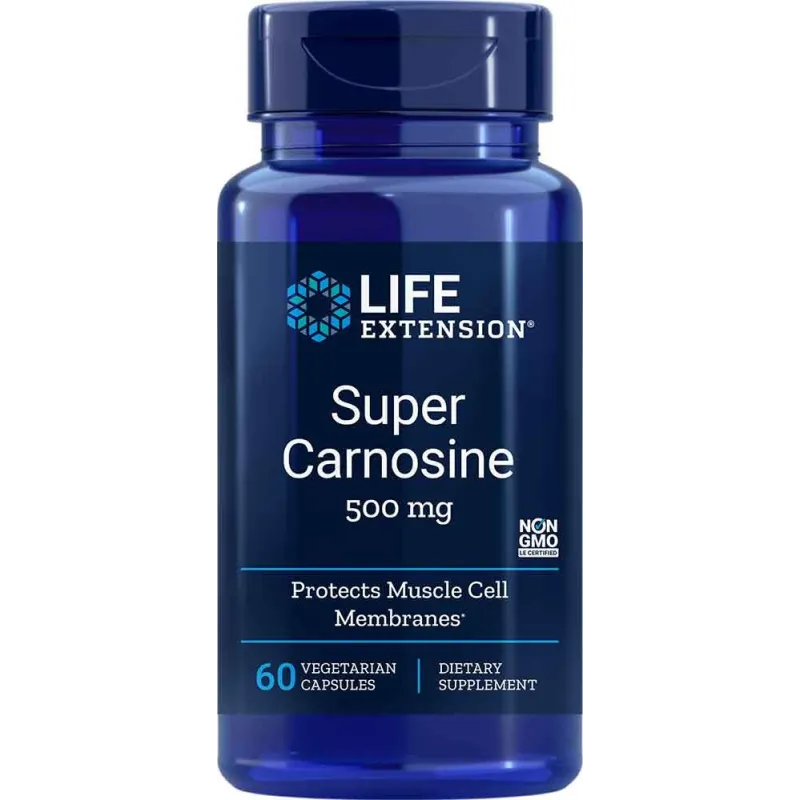
Super Carnosine
500 mg, 60 vegetarian capsules
Item Catalog Number: 02020
 Carnosine is a dipeptide consisting of amino acids beta-alanine and L-histidine. Carnosine acts as both an antioxidant and a pH buffer, protecting muscle cell membranes from oxidation both during and after exercise. Carnosine also inhibits glycation, a natural chemical reaction that can contribute to a variety of age-related factors — so add it to your health regimen today.
Benefits at a Glance:
Vital nerve and muscle cells naturally contain high levels of carnosine. But as we age, carnosine levels decline — making supplementation essential for athletes and aging individuals alike. Our Super Carnosine formula contains 500 mg of this potent antioxidant amino acid, as well as a form of vitamin B1 to boost carnosine's antioxidant and protective benefits.
Our Super Carnosine formula also contains luteolin to help safeguard DNA health,6 plus thiamine (vitamin B1) and benfotiamine (a derivative of thiamine) to help inhibit glycation reactions7,8 and complement the health benefits of carnosine.
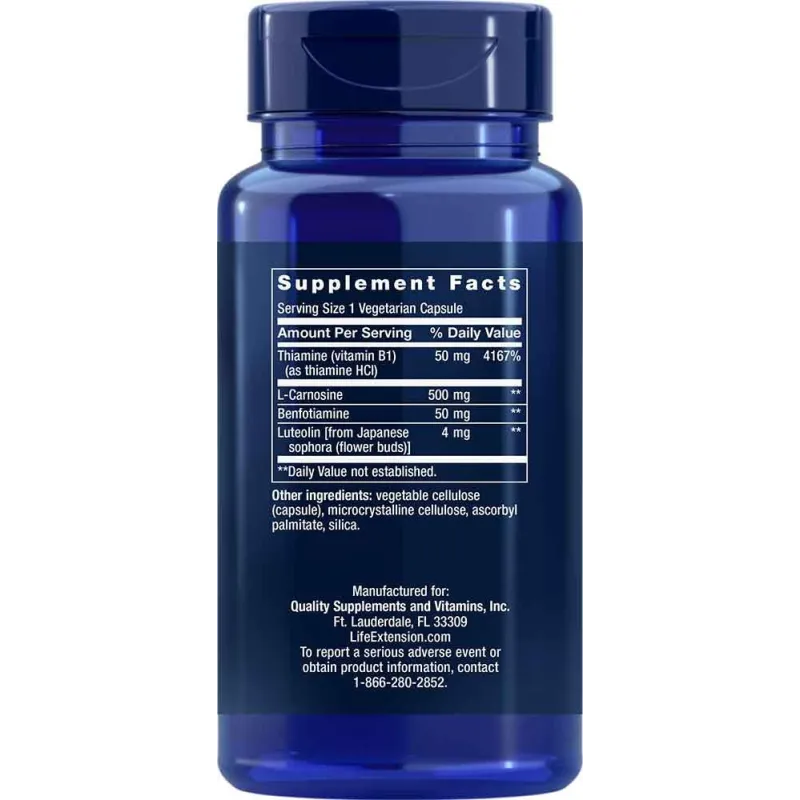
Serving Size 1 vegetarian capsule
| Amount Per Serving | |
|---|---|
| Thiamine (vitamin B1) (as thiamine HCl) | 50 mg |
| L-Carnosine | 500 mg |
| Benfotiamine | 50 mg |
| Luteolin [from Japanese sophora (flower buds)] | 4 mg |
| Other ingredients: vegetable cellulose (capsule), microcrystalline cellulose, ascorbyl palmitate, silica. | |
Non-GMO
Dosage and Use
Take one (1) capsule two to three times daily with or without food, or as recommended by a healthcare practitioner.
Warnings
KEEP OUT OF REACH OF CHILDREN
DO NOT EXCEED RECOMMENDED DOSE
Do not purchase if outer seal is broken or damaged.
When using nutritional supplements, please consult with your physician if you are undergoing treatment for a medical condition or if you are pregnant or lactating.
23,76 €
56,47 €
34,25 €
24,87 €

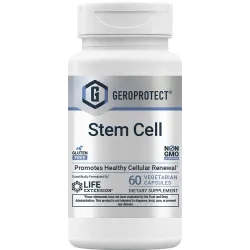
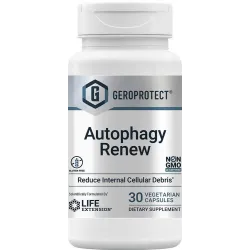


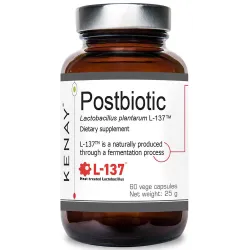


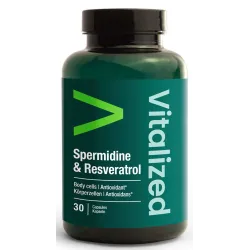
Carnosine is a dipeptide (beta-alanine + L-histidine) that prevents advanced glycation end-products (AGEs) formation—toxic compounds from sugar-protein reactions causing 40-70% of age-related tissue damage. Carnosine binds reactive carbonyls blocking glycation by 50-80%, protecting proteins from cross-linking and dysfunction. It also reverses existing glycation damage by 20-40% through carbonyl scavenging. This anti-glycation activity protects tissues from diabetes complications, skin aging, cataracts, and neurodegeneration where AGEs accumulate 2-5x higher than healthy tissue.
Carnosine (500mg daily) extends cellular lifespan by 20-30% in culture, reduces cellular senescence markers by 30-50%, and protects telomeres from oxidative shortening. It activates autophagy (cellular cleanup) by 25-45%, enhances mitochondrial function by 20-35%, and reduces age-related protein aggregation by 40-60%. Studies show improved skin elasticity by 15-30%, reduced wrinkle depth by 20-35%, and enhanced wound healing by 25-40% with supplementation.
Yes—carnosine is a potent antioxidant neutralizing hydroxyl radicals (most damaging) with 2-3x potency of vitamin E. It reduces lipid peroxidation by 40-60%, protects DNA from oxidative damage by 50-70%, and enhances cellular antioxidant enzymes (SOD, catalase) by 30-50%. Carnosine also chelates pro-oxidant metals (copper, zinc) preventing them from generating free radicals, reducing oxidative stress by 35-55% overall.
Carnosine crosses blood-brain barrier providing neuroprotection. It reduces beta-amyloid aggregation by 30-60% (Alzheimer's hallmark), protects neurons from excitotoxicity by 40-70%, and prevents mitochondrial dysfunction in brain cells. Studies show 15-30% improvement in cognitive function, 20-35% better memory in aging individuals, and 25-45% slower cognitive decline over 6-12 months supplementation. May reduce dementia risk by 20-40% through multiple protective mechanisms.
Take 500-1000mg daily (1-2 capsules) with or without food. Higher doses (1500-2000mg) used in some longevity protocols but 500-1000mg provides strong benefits. Divide into morning and evening for stable levels. Effects accumulate—anti-glycation benefits within 4-8 weeks, cognitive improvements over 8-16 weeks, anti-aging effects maximize after 6-12 months continuous use. Combining with alpha-lipoic acid and benfotiamine enhances anti-glycation synergistically by 30-50%. Safe for long-term daily use with no known toxicity.
Results: Laboratory studies show carnosine prevents advanced glycation end-products (AGEs) formation by 50-80%, protects proteins from glycation damage, and reverses existing glycation by 20-40% through carbonyl scavenging.
Citation: Hipkiss AR, et al. "Carnosine protects proteins against methylglyoxal-mediated modifications." Biochemical and Biophysical Research Communications. 1998;248(1):28-32.
Results: Human trial demonstrates carnosine (500mg daily) improves skin appearance, increases elasticity by 15-30%, reduces wrinkle depth by 20-35%, and enhances facial skin texture over 12 weeks.
Citation: Iovine B, et al. "Neuroprotective activity of carnosine." Molecules. 2016;21(12):1747.
Results: Research shows carnosine reduces beta-amyloid aggregation by 30-60%, protects neurons from oxidative stress by 40-70%, and improves cognitive function markers in aging models.
Citation: Corona C, et al. "Dietary zinc supplementation of 3xTg-AD mice increases BDNF levels and prevents cognitive deficits as well as mitochondrial dysfunction." Cell Death & Disease. 2010;1:e91.
Results: Studies confirm carnosine extends cellular lifespan by 20-30%, reduces senescence markers, and provides comprehensive anti-aging effects through anti-glycation and antioxidant mechanisms.
Citation: McFarland GA, et al. "Retardation of the senescence of cultured human diploid fibroblasts by carnosine." Experimental Cell Research. 1994;212(2):167-175.