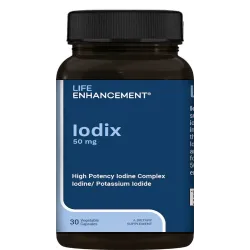
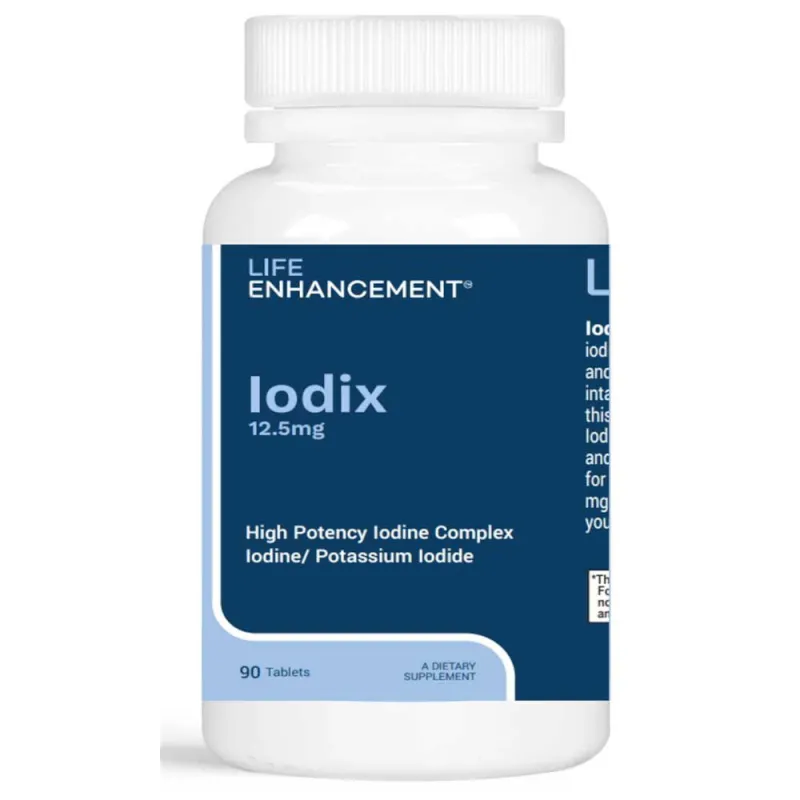
Iodix 12.5 mg

Category: Minerals

Manufacturer:

Trace element essential for life

  • The primary role of iodine is to support the synthesis of thyroid hormones
  • Iodine also plays an important role in fetal neurodevelopment and cognitive development in children
  • Iodine has been shown to support healthy breast tissue in women
  • Increased iodine intake has been strongly correlated with a reduction in stomach cancer
  • Iodine is an essential micronutrient for normal reproduction

  • Increasing dietary iodine intake may reduce the risk of breast, endometrial, and ovarian cancer

In stock

24,96 €

Volume discounts

Quantity Price You Save
2 23,96 € Up to 2,00 €
4 23,46 € Up to 5,99 €

By buying this product you can collect up to 24 loyalty points. Your cart will total 24 points that can be converted during next order into a voucher of 1,20 €.

More info


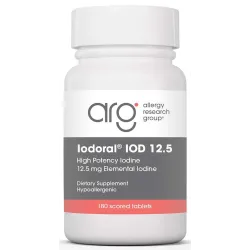
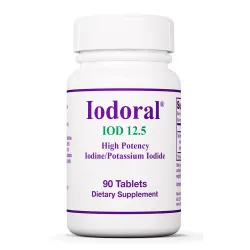
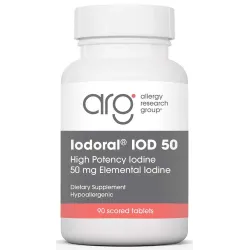
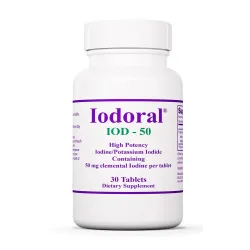
Iodix 12,5 mg (Iodoral formula)

Item Catalog Number: 09001

90 tablets

Iodine is a trace element essential for life. Its primary biological role is supporting production the thyroid hormones triiodothyronine (T3) and thyroxine (T4).

The thyroid gland, breast tissue, and gastrointestinal tracts share some similarities, all of which contain a high concentration of iodine. The cells that line the stomach in particular concentrate iodine, taking advantage of its antioxidant effects.

Iodine-rich foods have long been recognized as natural therapies for high blood pressure and cardiovascular disease. Even when there are no obvious symptoms, hypothyroidism - iodine deficiency can contribute to the onset of heart disease and stroke, and increase the risk of dying from these diseases.

Benefits at a Glance:

  • The primary role of iodine is to support the synthesis of thyroid hormones
  • Iodine also plays an important role in fetal neurodevelopment and cognitive development in children
  • Iodine has been shown to support healthy breast tissue in women
  • Increased iodine intake has been strongly correlated with a reduction in stomach cancer [14]
  • Iodine is an essential micronutrient for normal reproduction [12]
  • Increasing dietary iodine intake may reduce the risk of breast, endometrial, and ovarian cancer [13]

People who may be at risk of not getting enough iodine include: residents of developing countries ,vegetarians and vegans, pregnant and breastfeeding women.

Those who are deficient, at risk of deficiency, or whose diet may be lacking should focus on including more whole food sources of iodine and consider supplementing to ensure adequate intake.

Iodine deficiency may lead to obesity, cognitive impairment, heart disease, psychiatric disorders, and various forms of cancer.

Several investigators have shown convincing evidence for the need for adequate iodine intake. Japanese women living in Japan consumed a daily average of 13.8 mg total elemental iodine and some research suggests this is an important factor for their relative health. In the 1960's, one slice of bread in the USA contained the full RDA of 0.15 mg iodine. Over the last 2 decades, iodine was replaced by bromine in the bread making process. Bromine may block thyroid function and may interfere with iodine in the body.

The RDA limits for vitamins and minerals were established after World War II. One of the last essential elements included in the RDA system was iodine, established in 1980 and confirmed in 1989. The RDA for iodine was based on the amount of iodine/iodide needed to prevent goiter, extreme stupidity and hypothyroidism. The optimal requirement of the whole human body for iodine has never been studied. Therefore, the optimal amount of this element for physical and mental wellbeing is unknown.
Based on demographic studies, the mainland Japanese consumed an average of 13.8 mg daily and they are one of the healthiest people on planet earth.

For optimal thyroid iodine metabolism, it is recommended to take it together with key cofactors: selenium, magnesium, zinc, vitamins B2 and B3, vitamin A, vitamin C, and an adequate amount of salt (chloride) to support iodine transport.

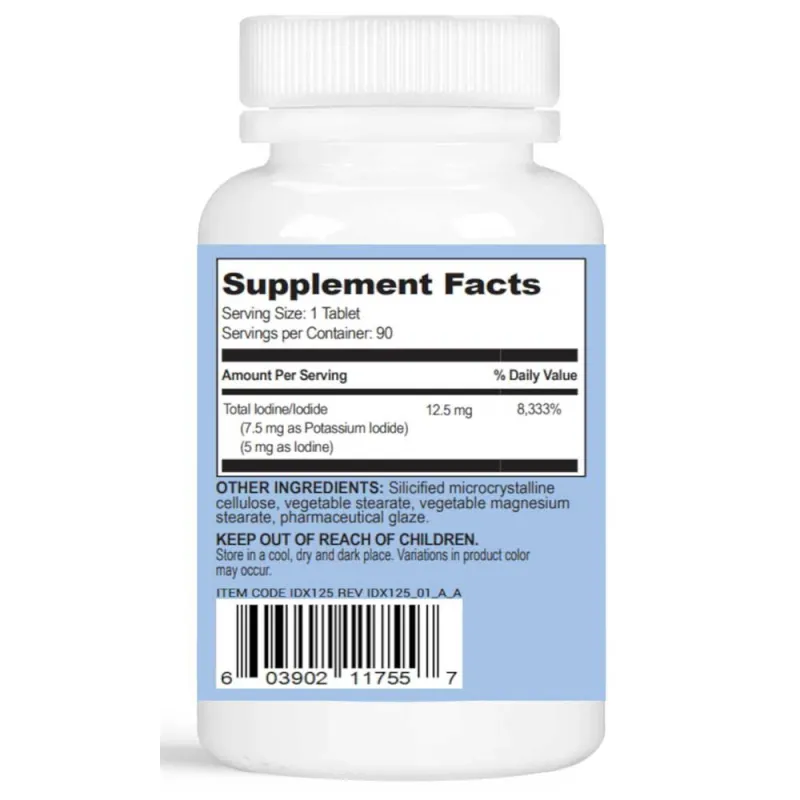
Supplement Facts

Serving Size 1 tablet

Amount per serving:
Total Iodine/Iodide 12,5 mg
(as potassium Iodide) 7,5 mg
(as Iodine)  5 mg
Other ingredients: silicified microcrystalline cellulose, vegetable stearate, vegetable magnesium stearate, pharmaceutical glaze.

Store in a cool, dry place. Variations in product color may occur.

Dosage and Use

Take  1 tablet daily with or without food, or as recommended by a healthcare practitioner.

Cautions: Pregnant or breastfeeding women must consult their healthcare professional before use.

If you experience any of the following, stop ingesting this supplement and contact your physician: acne-like skin lesions in certain areas of your body, headache in the frontal sinus, unpleasant brassy taste, increased salivation, and sneezing.

If you have a thyroid or other medical condition or are taking prescription medications, consult your doctor before using this product.


Warnings

KEEP OUT OF REACH OF CHILDREN


DO NOT EXCEED RECOMMENDED DOSE

Do not purchase if outer seal is broken or damaged.

When using nutritional supplements, please consult with your physician if you are undergoing treatment for a medical condition or if you are pregnant or lactating.

  1. Iodine Fact Sheet for Health Professionals https://ods.od.nih.gov/factsheets/Iodine-HealthProfessional/
  2. Chittimoju SB, Pearce EN. Iodine Deficiency and Supplementation in Pregnancy. Clin Obstet Gynecol. 2019;62(2):330-338.
  3. Chung, H. R. "Iodine and thyroid function." Annals of Pediatric Endocrinology & Metabolism, March 2014, https://www.ncbi.nlm.nih.gov/labs/pmc/articles/PMC4049553/
  4. Duborská, E. et al. "Iodine biofortification of vegetables could improve iodine supplementation status." Agronomy, October 2020, https://www.mdpi.com/2073-4395/10/10/1574/htm
  5. Higdon J et al., "Iodine." 2001, https://lpi.oregonstate.edu/mic/minerals/iodine
  6. Mathews, D. M. et al. "Iodine and fertility: do we know enough?" Human Reproduction, January 2021, https://pubmed.ncbi.nlm.nih.gov/33289034/
  7. Niwattisaiwong S et al. "Iodine deficiency: Clinical implications." Cleveland Clinic Journal of Medicine, March2017, https://pubmed.ncbi.nlm.nih.gov/28322679/
  8. Triggiani Vet al. "Role of iodine, selenium and other micronutrients in thyroid function and disorders." Endocr Metab Immune Disord Drug Targets., September 2009, https://pubmed.ncbi.nlm.nih.gov/19594417/
  9. Zimmermann MB. "The role of iodine in human growth and development." Seminars in Cell & Developmental Biology, August 2011, https://pubmed.ncbi.nlm.nih.gov/21802524/
  10. "Iodine Fact Sheet for Health Professionals." U. S. National Institutes of Health Office of Dietary Supplements, March 2018, https://ods.od.nih.gov/factsheets/Iodine-HealthProfessional/
  11. A Review of Iodine Status of Women of Reproductive Age in the USA https://www.ncbi.nlm.nih.gov/pmc/articles/PMC6373336/
  12. Iodine and fertility: do we know enough?https://academic.oup.com/humrep/article/36/2/265/6025913?login=false
  13. Dietary iodine and risk of breast, endometrial, and ovarian cancer https://pubmed.ncbi.nlm.nih.gov/58152/
  14. Iodine prophylaxis--the protective factor against stomach cancer in iodine deficient areas https://pubmed.ncbi.nlm.nih.gov/17497074/
  15. Ghent, W., et al, Can. J. Surg., 36:453-460,1993.
  16. Eskin, B., et al, Biological Trace Element Research, 49:9-19, 1995.
  17. Marine, D., Atl. Med. J., 26:437-442, 1923.
  18. Abraham,G.E., The Original Internist, 11:17-36, 2004.
  19. Gennaro A.R., Remington: 19th Edition, 1995, Mack Publishing Co, 1267.
  20. Abraham, G.E., Flechas, J.D., Hakala, J.C., The Original Internist, 9:30-41, 2002.
  21. Epstein, S.S., et al, Prevention Program Macmillan, NY, 1998, pg5.
  22. Abraham, G.E., The Original Internist, 11:(2) 29-38, 2004.
  23. Abraham, G.E. Townsend Letter, 245:100-101, 2003.
  24. Abraham, G.E., Flechas, J.D., Hakala, J.C., The Original Internist, 9:5-20, 2002.

Customers who bought this product also bought:

25 other products in the same category:

Scientific Sources

Frequently Asked Questions about Iodix 12.5 mg

Why is iodine important and why might people be deficient?

Iodine is essential for thyroid hormone production. Your thyroid uses iodine to synthesize hormones that regulate metabolism, energy production, and growth. Beyond the thyroid, iodine is concentrated in breasts, prostate, and ovaries. Deficiency is common due to reduced salt consumption, non-iodized specialty salts, and declining iodine in foods.

How much iodine do I need and is 12.5mg too much?

The RDA for iodine is 150 mcg for adults. The 12.5mg dose is approximately 83 times the RDA - significantly higher. This therapeutic dose exceeds the tolerable upper limit (1.1mg) and should only be used under professional guidance, not as routine supplementation.

What are potential benefits and risks of higher-dose iodine?

Higher doses may support breast health, provide antimicrobial benefits, and supply antioxidant protection. However, risks include triggering thyroid dysfunction in susceptible individuals, particularly those with autoimmune thyroid disease. Adverse effects can include metallic taste, GI upset, and skin rashes.

Should I test my iodine levels before supplementing?

Testing is strongly advisable before high-dose supplementation. The 24-hour urine iodine test is gold standard. Thyroid function (TSH, Free T3, Free T4) and antibody testing should be done before starting and monitored during use.

How should I use Iodix if appropriate?

If medically appropriate, start slowly (1-3mg), gradually increasing while monitoring. Take with food to minimize GI effects. Include companion nutrients like selenium, vitamin C, and magnesium. Regular thyroid function monitoring is essential.

  • Iodine is essential for thyroid hormone synthesis regulating metabolism and energy
  • The 12.5mg dose provides therapeutic amount for specific uses under guidance
  • Iodine concentrates in breast tissue and may support breast health
  • Antimicrobial properties of iodine support immune function
  • Iodine's antioxidant effects provide cellular protection from oxidative stress
  • Adequate iodine may help metabolize estrogen and support hormone balance
  • Some practitioners report fibrocystic breast condition improvements with iodine
  • Japanese populations consuming 10mg+ daily from seaweed show certain health benefits
  • Higher doses may address deficiency when lower amounts insufficient
  • Potassium iodide form used is well-absorbed and bioavailable
  • Adults seeking thyroid hormone support and metabolic function optimization
  • Individuals with documented or suspected iodine deficiency
  • Women seeking breast tissue health support
  • People with family history of thyroid conditions requiring preventive support
  • Individuals in iodine-deficient geographic regions
  • Those following vegetarian or vegan diets with limited iodine intake
  • Adults seeking cognitive function and neurodevelopment support
  • People wanting to support healthy metabolism and energy levels
  • Individuals committed to consistent daily supplementation under healthcare guidance
  • Those seeking evidence-based thyroid and hormonal health optimization
  • Individuals with hyperthyroidism or Graves' disease without medical supervision
  • People with iodine sensitivity or documented iodine allergy
  • Those taking thyroid medications without consulting their healthcare provider
  • Pregnant or nursing women without medical consultation and monitoring
  • Children under 18 without healthcare provider guidance
  • Individuals scheduled for radioactive iodine treatment or thyroid imaging
  1. Take 1 tablet daily with or without food as recommended by healthcare practitioner
  2. Best taken consistently at same time each day for optimal thyroid support
  3. May be taken with selenium, magnesium, zinc, and vitamins B2, B3, A, C for enhanced thyroid metabolism
  4. Start with lower dose if new to iodine supplementation
  5. Monitor for any adverse reactions such as acne-like lesions, headache, metallic taste, or increased salivation
  6. Allow 8-12 weeks for full thyroid hormone optimization benefits
  7. Combine with healthy diet including adequate salt (chloride) for optimal iodine transport
  8. Regular thyroid function testing recommended when using therapeutic doses
  9. Discontinue and consult healthcare provider if experiencing adverse effects
  10. Store in cool, dry place away from heat and moisture

Results: Japanese populations consuming 10-15mg iodine daily from seaweed have low rates of certain conditions, though causation not definitively established.

Citation: Zava TT, Zava DT. Assessment of Japanese iodine intake. Thyroid. 2011.

Results: High-dose iodine (6-12mg daily) showed improvements in fibrocystic breast conditions in some studies, though research limited.

Citation: Ghent WR, et al. Iodine replacement in fibrocystic disease of the breast. Can J Surg. 1993.

Results: Excessive iodine intake can trigger thyroid dysfunction in susceptible individuals, particularly those with underlying thyroid disease.

Citation: Leung AM, Braverman LE. Consequences of excess iodine. Nat Rev Endocrinol. 2014.

Results: Case reports and clinical experience suggest some people tolerate higher-dose iodine well while others experience adverse effects, emphasizing need for individualized approach.

Citation: Abraham GE, et al. Orthoiodosupplementation: Clinical case reports. Original Internist. 2005.