 English
 Polski
 Deutsch
 Français
 ελληνικά
 Español
 Italiano
15,31 €

Quantity:
Total:
Total products:
Total shipping: To be determined
Total:
Science-based food supplements

Manufacturer: Life Extension
Waiting for delivery
| Quantity | Price | You Save |
|---|---|---|
| 2 | 11,23 € | Up to 0,94 € |
| 4 | 11,00 € | Up to 2,81 € |
By buying this product you can collect up to 11 loyalty points. Your cart will total 11 points that can be converted during next order into a voucher of 0,55 €.

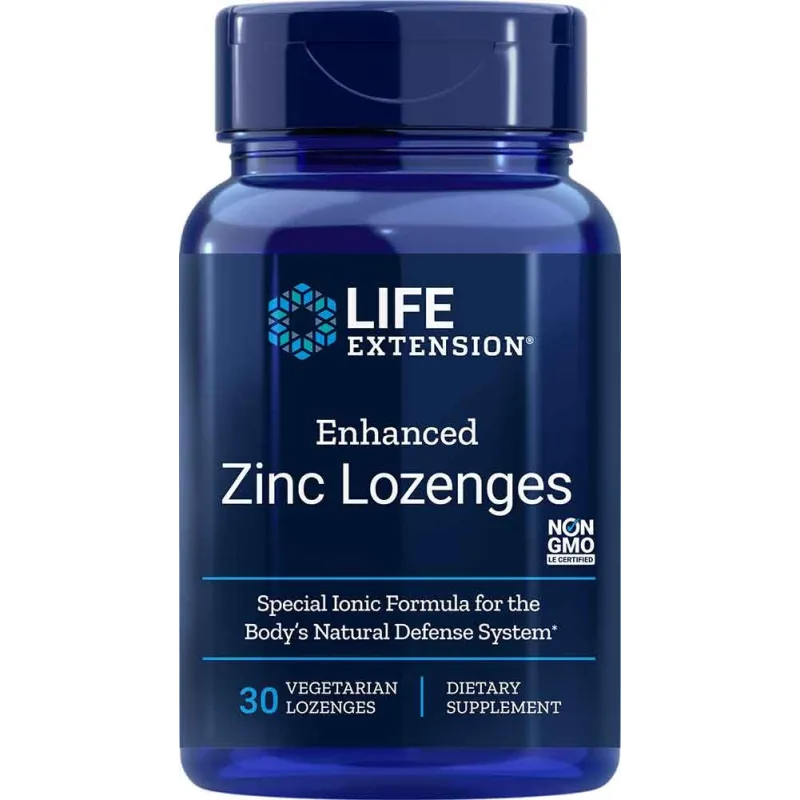
Enhanced Zinc Lozenges
30 vegetarian lozenges
Item Catalog Number: 01961
Zinc stimulates the activity of about 300 enzymes and fortifies the immune system. So it’s wise to take the best zinc lozenge during the cold season — and throughout the year — to maintain the body’s natural defenses.
Benefits at a Glance
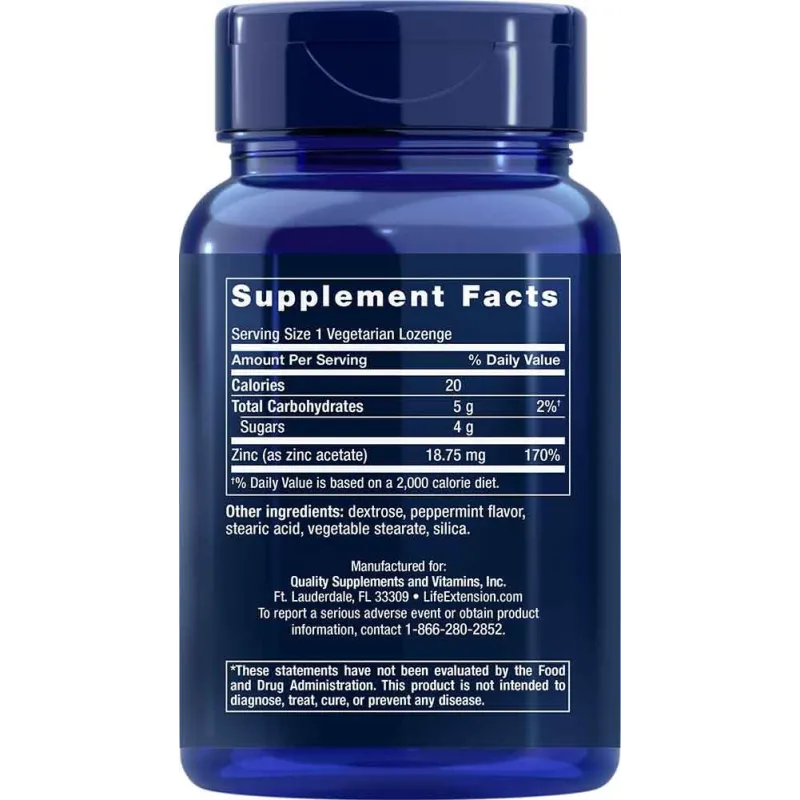
Serving Size 1 vegetarian lozenge
| Amount Per Serving | |
|---|---|
| Calories | 20 |
| Total Carbohydrate | 5 g |
| Sugars | 4 g |
| Zinc (as zinc acetate) | 18.75 mg |
| Other ingredients: dextrose, peppermint flavor, stearic acid, vegetable stearate, silica. | |
Dosage and Use
Completely dissolve in mouth one (1) lozenge every 2 wakeful hours, not to exceed 8 lozenges per day, or as recommended by a healthcare practitioner.
Do not use for more than 3 consecutive days.
Do not chew or swallow lozenge.
May cause nausea if taken on empty stomach.
Caution
Supplemental zinc can inhibit the absorption and availability of copper. If more than 50 mg of supplemental zinc is taken daily on a chronic basis, 2 mg of supplemental copper should also be taken to prevent copper deficiency. Chronic ingestion of more than 100 mg of zinc daily may be immunosuppressive for some aspects of T-cell and NK cell function.
Warnings
KEEP OUT OF REACH OF CHILDREN
DO NOT EXCEED RECOMMENDED DOSE
Do not purchase if outer seal is broken or damaged.
When using nutritional supplements, please consult with your physician if you are undergoing treatment for a medical condition or if you are pregnant or lactating.
15,31 €
8,70 €
13,63 €
12,83 €




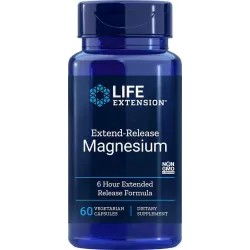
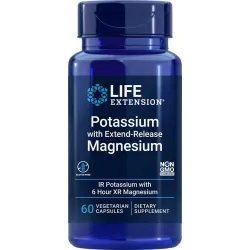
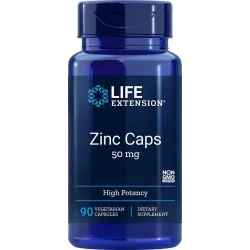
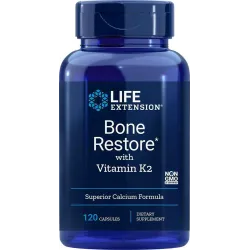


Zinc lozenges demonstrate remarkable efficacy for reducing cold duration through direct antiviral mechanisms requiring local zinc contact with throat and nasal tissues. When dissolved slowly in the mouth, ionic zinc released from lozenges coats oral and pharyngeal mucosa where rhinoviruses—causing 50% of common colds—initially replicate. Zinc ions directly inhibit viral replication through multiple mechanisms: they block viral RNA polymerase preventing genome copying, inhibit viral protease enzymes essential for viral assembly, prevent viral attachment to respiratory epithelial cells, and stabilize cell membranes against viral penetration. Critically, these antiviral effects require high local zinc concentrations achievable only through lozenges dissolving in mouth, not from swallowed zinc supplements reaching systemic circulation. Meta-analyses of randomized controlled trials demonstrate zinc acetate or gluconate lozenges started within 24 hours of symptom onset reduce cold duration by 40-50%—shortening typical 7-day colds to 3-4 days. The effect proves dose-dependent: studies using 75-100 mg total daily zinc (in divided lozenge doses every 2-3 hours while awake) show superior results versus lower doses. Symptom severity also decreases significantly with 30-40% reductions in cough, nasal discharge, and sore throat intensity. The mechanism requires frequent dosing maintaining constant zinc presence in throat—taking 4-6 lozenges daily spaced throughout waking hours proves optimal.
Research clearly demonstrates zinc acetate and zinc gluconate as the effective forms for cold treatment, while other zinc compounds prove ineffective due to how they release ionic zinc. The critical factor is "ionic zinc availability"—only positively charged free zinc ions exhibit antiviral activity, and certain zinc compounds or formulation additives bind zinc preventing ion release. Zinc acetate releases ionic zinc most effectively, making it the gold standard, while zinc gluconate also performs well. In contrast, zinc citrate, zinc orotate, and zinc picolinate release insufficient ionic zinc for antiviral effects. Formulation ingredients matter enormously—citric acid, tartaric acid, glycine, and sorbitol all chelate zinc ions preventing their release, so lozenges containing these prove ineffective despite containing zinc. The optimal dose based on clinical trials is 75-100 mg total daily zinc from lozenges, divided into 4-6 lozenges taken every 2-3 hours while awake. Individual lozenges typically provide 13-23 mg zinc, so 18.75 mg per lozenge represents a practical therapeutic dose. Starting treatment within 24 hours of first symptoms proves critical—studies show dramatic efficacy reduction when zinc begins after 24 hours, likely because early viral replication has already established infection. Continue lozenge use until symptoms completely resolve, typically 3-5 days with zinc versus 7 days without treatment.
Zinc lozenges function primarily as treatment reducing duration and severity of existing colds rather than prevention, though daily oral zinc supplementation may reduce cold incidence through different mechanisms. The treatment benefit requires high local zinc concentrations (75-100 mg daily in divided lozenge doses) maintained constantly during waking hours—this intensive regimen proves impractical for ongoing prevention. However, lower-dose daily zinc supplementation (15-30 mg oral zinc) supports immune function potentially reducing cold frequency by 20-35% through systemic immune enhancement. The mechanisms differ fundamentally: treatment lozenges work through direct antiviral effects in throat requiring local contact, while preventive supplementation enhances immune cell function (neutrophils, NK cells, T-cells) throughout the body. Studies of daily zinc supplementation show particularly robust prevention in zinc-deficient populations—children in developing countries experience 35-45% reduction in respiratory infection incidence. For well-nourished adults, prevention benefits prove more modest but still meaningful at 15-25% reduced cold frequency. The practical approach combines both strategies: maintain daily systemic zinc supplementation (15-30 mg) for immune support and prevention, while keeping zinc acetate lozenges available to begin intensive treatment (75-100 mg daily in lozenges) at first sign of cold symptoms for duration reduction.
Zinc lozenges demonstrate good safety for short-term use during colds, though several side effects and precautions warrant attention. The most common complaint involves taste disturbances—60-80% of users report unpleasant metallic taste or mouth irritation from zinc lozenges, though this proves transient and resolves immediately upon discontinuation. Nausea occurs in 15-25% of users, particularly when lozenges dissolve on empty stomach; taking with food or timing doses after meals minimizes this effect. The intensive dosing (75-100 mg daily from lozenges) should continue only for cold duration (3-5 days), not long-term, as chronic high-dose zinc interferes with copper absorption potentially causing copper deficiency anemia and neurological issues with prolonged use exceeding 2 weeks. For context, the tolerable upper limit for zinc is 40 mg daily for ongoing supplementation, so lozenge treatment doses significantly exceed this—acceptable for brief cold treatment but not chronic use. One critical safety warning involves zinc nasal sprays and gels—these can cause permanent anosmia (loss of smell) through direct damage to olfactory neurons and should be avoided entirely. Oral lozenges don't carry this risk as zinc doesn't contact olfactory epithelium. Individuals with rare zinc metabolism disorders, those on antibiotics (zinc interferes with tetracycline and quinolone absorption), and people taking penicillamine should avoid high-dose zinc or separate dosing by several hours.
Maximizing zinc lozenge effectiveness requires specific protocol adherence based on clinical research. Begin treatment immediately at first cold symptoms—within 24 hours proves critical as delayed initiation dramatically reduces efficacy. Take first lozenge as soon as you notice scratchy throat, nasal symptoms, or other cold indicators. Use 4-6 lozenges daily (providing 75-100 mg total zinc) spaced every 2-3 hours throughout waking hours. Dissolve lozenges slowly in mouth allowing 15-20 minutes for complete dissolution—sucking rapidly or chewing prevents adequate zinc-mucosa contact time required for antiviral effect. Avoid eating or drinking for 30 minutes after lozenge to maintain zinc coating on throat tissues. Continue intensive lozenge use until all symptoms completely resolve, typically 3-5 days. Stopping early when feeling better but before complete resolution allows viral replication to resume. Choose zinc acetate or gluconate lozenges without citric acid, tartaric acid, or other zinc-binding ingredients. Enhanced formulations often combine zinc with vitamin C, elderberry, or other immune supporters—these additions likely provide complementary benefits. For nausea-prone individuals, take lozenges after meals rather than on empty stomach. Store lozenges properly as moisture exposure can degrade zinc effectiveness. The intensive treatment protocol proves impractical for daily prevention—reserve lozenges for cold treatment while using daily low-dose zinc supplements (15-30 mg) for immune support and cold prevention.
Results: Meta-analyses demonstrate zinc acetate or gluconate lozenges started within 24 hours of symptom onset reduce cold duration by 40-50%, shortening typical 7-day colds to 3-4 days with 75-100 mg total daily zinc in divided doses.
Citation: Hemilä H, et al. Open Respir Med J. 2017 May;11:30-42.
Results: Research shows zinc lozenges reduce symptom severity by 30-40% including cough intensity, nasal discharge, and sore throat through direct antiviral mechanisms requiring local zinc-mucosa contact in throat tissues.
Citation: Singh M, et al. Cochrane Database Syst Rev. 2013 Jun;(6):CD001364.
Results: Studies reveal zinc acetate releases ionic zinc most effectively for antiviral activity, while formulations containing citric acid or other chelating agents prove ineffective despite containing zinc due to reduced ion availability.
Citation: Eby GA. Med Hypotheses. 2010 Oct;75(4):390-3.
Results: Prevention trials show daily zinc supplementation at 15-30 mg reduces cold incidence by 20-35% through systemic immune enhancement, with treatment lozenges providing complementary duration-reduction benefits through different mechanisms.
Citation: Science M, et al. CMAJ. 2012 Jul;184(10):E551-61.