 English
 Polski
 Deutsch
 Français
 ελληνικά
 Español
 Italiano
24,96 €

Quantity:
Total:
Total products:
Total shipping: To be determined
Total:
Science-based food supplements

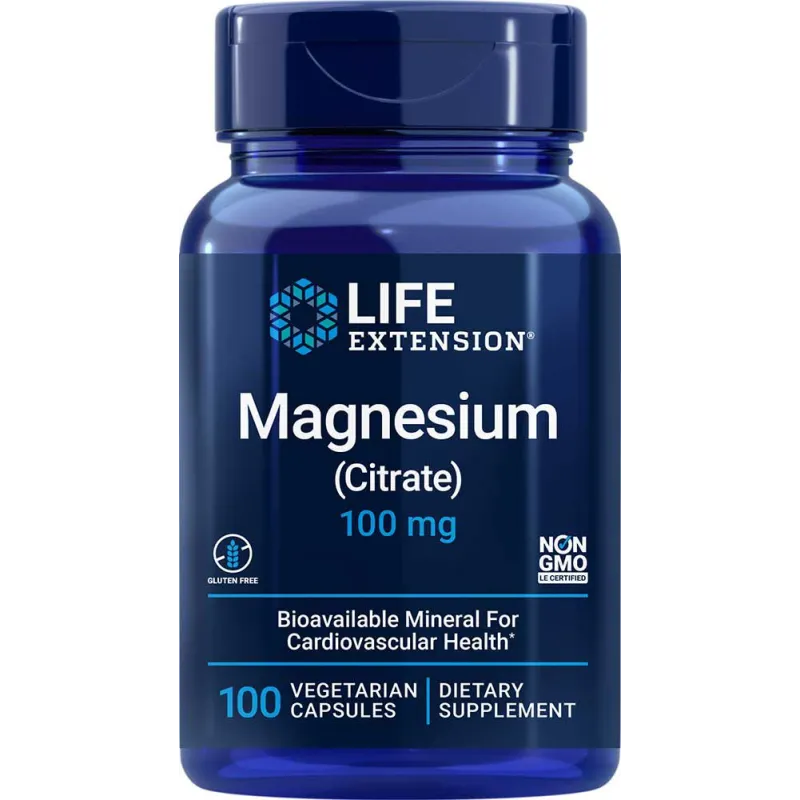

Manufacturer: Life Extension
In stock
| Quantity | Price | You Save |
|---|---|---|
| 2 | 16,08 € | Up to 1,34 € |
| 4 | 15,75 € | Up to 4,02 € |
By buying this product you can collect up to 16 loyalty points. Your cart will total 16 points that can be converted during next order into a voucher of 0,80 €.

Magnesium (Citrate)
100 mg, 100 vegetarian capsules
Item Catalog Number: 01682EU

Serving Size 1 vegetarian capsule
| Amount Per Day (3 capsules): | |
|---|---|
| Magnesium (as magnesium citrate) | 300 mg |
| Ingredients: Magnesium citrate, capsule (hydroxypropylmethylcellulose), bulking agent (microcrystalline cellulose/cellulose gel. | |
Non-GMO
Dosage and Use
Take one (1) capsule, one to three times daily. Can be taken all at once or in divided doses.
Caution
If taken in high doses, magnesium may have a laxative effect. If this occurs, divide dosing, reduce intake, or discontinue product.
Warnings
KEEP OUT OF REACH OF CHILDREN
DO NOT EXCEED RECOMMENDED DOSE
Do not purchase if outer seal is broken or damaged.
When using nutritional supplements, please consult with your physician if you are undergoing treatment for a medical condition or if you are pregnant or lactating.
24,96 €

18,86 €

18,47 €

30,05 €


















Magnesium Citrate is a highly bioavailable form of magnesium bound to citric acid, offering superior absorption compared to common forms like magnesium oxide. The citrate form dissolves easily in water and is readily absorbed in the intestines, ensuring your body can actually utilize the magnesium you consume. This form is particularly gentle on the digestive system while providing therapeutic amounts of elemental magnesium. Citrate also supports healthy pH balance and may help with occasional constipation, making it an excellent all-around choice for magnesium supplementation.
Magnesium is involved in over 300 enzymatic reactions throughout the body, making it essential for numerous health functions. It supports cardiovascular health by helping maintain healthy blood pressure and heart rhythm. Magnesium is crucial for bone health, working synergistically with calcium and vitamin D. It supports healthy muscle function, reducing occasional cramps and promoting relaxation. The mineral plays a vital role in energy production at the cellular level and supports healthy nervous system function. Magnesium also promotes restful sleep, helps manage stress responses, and supports healthy blood sugar metabolism.
Magnesium deficiency is surprisingly common, with studies suggesting nearly half of adults consume less than the recommended daily amount. Modern agricultural practices have depleted magnesium in soil, reducing levels in foods. Food processing further decreases magnesium content. Certain medications including proton pump inhibitors and diuretics can deplete magnesium stores. High stress, excessive caffeine or alcohol consumption, and intense physical activity all increase magnesium needs. Older adults absorb magnesium less efficiently. Signs of deficiency can include muscle cramps, fatigue, poor sleep, and occasional mood concerns, making supplementation beneficial for many people.
Timing depends on your primary health goals. For sleep support, take magnesium 1-2 hours before bedtime, as it promotes relaxation and supports healthy sleep patterns. For muscle relaxation after exercise, take post-workout. For digestive regularity, evening dosing works well. For general health maintenance, split doses throughout the day with meals to enhance absorption and minimize any digestive effects. Magnesium citrate absorbs well with or without food, though taking with meals may reduce the mild laxative effect some people experience. Consistency matters more than timing, so choose a schedule you can maintain daily.
Magnesium citrate is generally safe to combine with most supplements and actually enhances the effectiveness of calcium and vitamin D for bone health. However, timing matters for optimal absorption. Take magnesium separately from high-dose calcium supplements (space by 2-3 hours) as they can compete for absorption. Avoid taking with zinc or iron supplements simultaneously for the same reason. Magnesium can be taken with omega-3s, vitamins, and most other supplements. If taking prescription medications, particularly antibiotics or bisphosphonates, consult your healthcare provider about proper spacing as magnesium can affect absorption of certain medications.
Results: Clinical studies demonstrate magnesium citrate has significantly higher bioavailability compared to magnesium oxide, with absorption rates 2-3 times greater, ensuring therapeutic blood levels can be achieved with lower doses and better tolerability.
Citation: Lindberg JS, et al. J Am Coll Nutr. 1990 Feb;9(1):48-55.
Results: Research shows magnesium supplementation supports healthy blood pressure, with meta-analyses indicating 3-4 mmHg reductions in systolic pressure and 2-3 mmHg reductions in diastolic pressure, particularly beneficial for individuals with borderline hypertension.
Citation: Kass L, et al. BMC Complement Altern Med. 2012 Apr;12:38.
Results: Studies indicate magnesium plays crucial role in bone health, with higher magnesium intake associated with increased bone mineral density and reduced fracture risk, working synergistically with calcium and vitamin D for optimal bone support.
Citation: Rude RK, et al. Nutr Rev. 2009 May;67(5):271-83.
Results: Clinical trials demonstrate magnesium supplementation improves sleep quality, reduces time to fall asleep, and increases sleep duration in individuals with occasional insomnia, particularly when combined with melatonin or taken before bedtime.
Citation: Abbasi B, et al. J Res Med Sci. 2012 Dec;17(12):1161-9.