 English
 Polski
 Deutsch
 Français
 ελληνικά
 Español
 Italiano

8,84 €

Quantity:
Total:
Total products:
Total shipping: To be determined
Total:
Science-based food supplements

Manufacturer: Kenay GmbH
Waiting for delivery
| Quantity | Price | You Save |
|---|---|---|
| 2 | 38,76 € | Up to 3,23 € |
| 4 | 37,95 € | Up to 9,69 € |
By buying this product you can collect up to 40 loyalty points. Your cart will total 40 points that can be converted during next order into a voucher of 2,00 €.

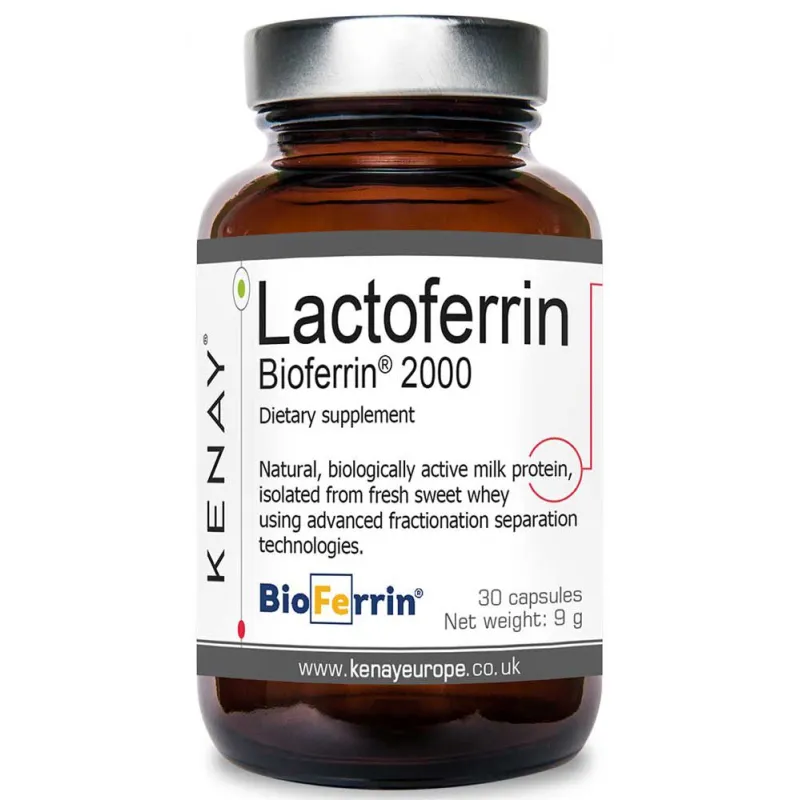
Lactoferrin BioFerrin® 2000
30 capsules
Item Catalog Number: K2318EN
Original product name: Lactoferrin BioFerrin® 2000
Lactoferrin is best known for its immune-boosting effect. However, lactoferrin is much more than only supporting the immune system.
Chemically, lactoreffin is a glycoprotein that can bind to iron ions. It is a biologically active milk protein derived from whey.[2,3] Bioferrin® 2000 by Glanbia Nutritionals used in our supplement is a natural, biologically active milk protein, isolated from fresh whey by using advanced separation technology.[1]
Lactoferrin, as the name suggests (lacto + ferrin = milk + iron), is iron binding milk protein, which helps to balance iron levels in the body.[2-7] Lactoferrin, because of its ability to strongly and reversibly bind iron ions, supports the body in maintaining the homeostasis of this important microelement.[3,8]
Lactoferrin is present in the milk of most mammals (the exceptions are probably dogs and rats).[2,3] The concentration of lactoferrin depends of the lactation phase. As scisntists have proven, colostrum may contain up to seven times more lactoferrin than mature milk.[3,4]
The human body can produce lactoreffine and it is present in many organs and cells of the human body. The presence of lactoferrin has been observed, among others, in the liver and pancreas and in the intestines, as well as in the prostate, lungs, brain and cerebrospinal fluid, and even in plasma and cells of the immune system.[2-6]
Benefits at a Glance:
Lactoferrin is a natural immune modulator
Lactoferrin modulates lipid metabolism, which not only better regulates satiety mechanisms, but also helps fight the tendency to adipose tissue accumulation. The available studies also show a positive role of this protein in reducing fatty liver.[2,3,9]
The prebiotic effects of lactoferrin supports not only intestinal health and the intestinal microbiome, but also the absorption of nutrients. Lactorephin used after antibiotic therapy helps restore the balance of the intestinal microbiome. Lactoferrin also shows antitoxic and antipathogenic properties.[2,3,10-12]
The aging process means changes in every system and cell of the entire body. Lactoferrin has been shown to have multidirectional anti-aging effects. It is not only an effective antioxidant, but also has anti-inflammatory and neuroprotective properties and alleviates mitochondrial dysfunction. [2,3,13]
Lactoferrin is a natural immune modulator and it's one of the first factors released upon encounter with pathogens. Lactoferrin modulate cytokine productio under foreign insults. Moreover, lactoferrin can modulate cytokine recognition and lymphocyte migratory potential.[14]
This, along with the ability to affect production and activity of reactive oxygen species, makes lactoferrin an unique regulator to a wide array of responses, including those involved in septic shock, inflammation, and subsequent development of disease related pathologies.[14]
Lactoferrin is also present in tears. Studies have reported a correlation between low tear lactoferrin levels and primary, secondary as well as non-Sjögren’s dry eyes [20,9].
Moreover, oral lactoferrin supplementation was used as a treatment in Sjogren’s and non-Sjögren dry eyes.[19,20]
Small Incision Cataract Surgery induces dry eye postoperatively. Oral lactoferrin has been shown to positively influence the tear film stability as well as alleviate dry eye symptoms of post cataract surgery patientseye after cataract surgery.[15-18,20]
The strenuous activity of athletes can result in the depletion of iron levels, as 18% of males and 38% of females are experiencing iron deficiencies.[1] Lactoferrin provides athletes with a delivery system that is backed by years of extensive research which may have a positive impact on their performance. Proper supplementation in addition to training directly impacts athletic performance levels.[1]
Lactoferrin BioFerrin®2000 is an excellent solution for balancing iron levels. BioFerrin®2000 is safe to use and is an excellent alternative to other forms of iron available as dietary supplements.
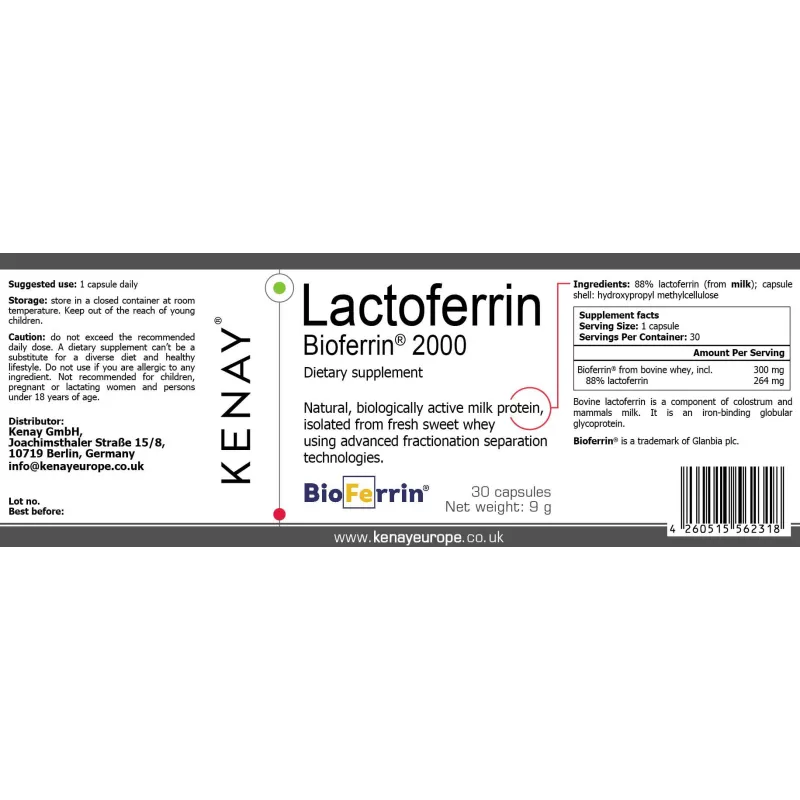
Daily dose: 1 capsule
| Amount Per Day (1 capsule) | |
|---|---|
|
Bioferrin® from bovine whey, incl: 88% lactoferrin |
300 mg |
|
264 mg |
|
|
Ingredients: 88% lactoferrin (from milk); capsule shell: hydroxypropyl methylcellulose |
|
Bioferrin® is a trademark of Glanbia plc
Dosage and Use
Take one (1) capsule daily or as recommended by a healthcare practitioner.
Storage: Store in a closed container at room temperature, out of the reach of small children.
Warnings:
Before you start using any dietary supplement, consult your doctor.
Dietary supplements are not medicines.
Do not exceed the recommended daily dose.
Dietary supplements cannot be used as a substitute for a varied diet.
Do not use in case of hypersensitivity to any ingredient of the preparation.
The product should not be used by pregnant or breastfeeding women and children and adolescents under 18 years of age.
8,84 €

22,69 €

38,89 €

23,76 €


















Lactoferrin is a multifunctional glycoprotein found abundantly in mammalian milk, particularly colostrum, serving as a crucial component of the innate immune system's first-line defenses. This iron-binding protein exhibits remarkable antimicrobial properties against bacteria, viruses, fungi, and parasites through multiple mechanisms. By sequestering free iron, lactoferrin deprives pathogens of this essential nutrient required for their growth and replication. Beyond nutrient deprivation, lactoferrin directly disrupts microbial cell membranes through its positively charged regions binding to negatively charged bacterial surfaces, causing structural damage and death. The protein also demonstrates antiviral activity by binding to host cell receptors and viral particles, preventing viral attachment and entry into cells—particularly relevant for respiratory viruses. BioFerrin 2000 represents pharmaceutical-grade bovine lactoferrin with verified purity and bioactivity, providing 200 mg per serving of highly bioavailable protein. Research shows lactoferrin enhances immune cell function by activating natural killer cells, macrophages, and neutrophils while modulating cytokine production to balance inflammatory responses. This immunomodulatory capacity makes lactoferrin valuable not just for fighting infections but for supporting overall immune resilience and reducing excessive inflammation.
Lactoferrin provides comprehensive antimicrobial protection through mechanisms extending well beyond simple immune stimulation. Against bacterial infections, lactoferrin demonstrates broad-spectrum activity against both gram-positive and gram-negative bacteria including pathogenic E. coli, Salmonella, Staphylococcus aureus, and Helicobacter pylori. The iron-binding capacity creates an iron-deficient environment hostile to bacterial growth, while direct membrane disruption kills bacteria through cell lysis. For viral infections, lactoferrin exhibits particular efficacy against respiratory viruses including influenza, RSV, and coronaviruses by preventing viral attachment to host cells and inhibiting viral replication. Clinical studies show lactoferrin supplementation reduces incidence and severity of common colds and respiratory infections by 20-30%. In the gastrointestinal tract, lactoferrin supports beneficial microbiome composition by selectively promoting growth of beneficial bacteria like Bifidobacterium and Lactobacillus while inhibiting pathogenic species. This prebiotic-like effect improves gut barrier integrity, reducing intestinal permeability and preventing translocation of endotoxins that trigger systemic inflammation. Research demonstrates lactoferrin reduces gastrointestinal infections, supports healing of gastric ulcers through anti-H. pylori activity, and alleviates inflammatory bowel symptoms. The protein also exhibits antifungal properties against Candida species, making it valuable for managing yeast overgrowth.
Lactoferrin's relationship with iron metabolism creates unique benefits for individuals with iron deficiency while simultaneously providing antimicrobial protection. Despite binding iron tightly, lactoferrin actually enhances iron bioavailability and absorption in the small intestine through specialized lactoferrin receptors on enterocytes. This mechanism allows more efficient iron uptake compared to standard iron supplements, with studies showing 20-30% improvements in iron absorption efficiency when lactoferrin is consumed with iron. For individuals with iron deficiency anemia, lactoferrin supplementation (100-200 mg daily) combined with lower-dose iron produces improvements in hemoglobin and ferritin comparable to higher-dose iron alone but with significantly fewer gastrointestinal side effects like constipation, nausea, and abdominal discomfort. This makes lactoferrin particularly valuable for pregnant women, menstruating women, and others requiring iron supplementation who struggle with standard iron tolerability. Beyond improving iron status, lactoferrin's iron-binding capacity in the gut creates an environment less favorable to iron-dependent pathogenic bacteria while supporting beneficial microbiome species. Research shows lactoferrin reduces inflammation associated with iron deficiency and may support erythropoiesis (red blood cell formation) through mechanisms beyond simple iron delivery. The dual benefits—improved iron absorption and reduced infection risk—make lactoferrin an elegant solution for iron deficiency management.
Lactoferrin demonstrates sophisticated immunomodulatory properties that extend beyond antimicrobial activity to regulation of inflammatory responses and potential benefits in autoimmune contexts. The protein modulates cytokine production, reducing pro-inflammatory mediators like TNF-α, IL-1β, and IL-6 by 30-50% while supporting anti-inflammatory cytokines like IL-10. This balanced immune modulation prevents excessive inflammatory responses that cause tissue damage while maintaining sufficient immune activation to combat pathogens. In inflammatory bowel disease specifically, research shows lactoferrin supplementation reduces disease activity scores, decreases intestinal inflammation measured by calprotectin levels, and improves mucosal healing. The mechanisms involve both direct anti-inflammatory effects and improvements in gut barrier integrity preventing inflammatory triggers. For rheumatoid arthritis and other autoimmune conditions, preliminary research suggests lactoferrin may reduce joint inflammation and pain scores through modulation of immune cell activity and reduction of inflammatory cytokines. The protein also exhibits antioxidant properties, neutralizing free radicals and reducing oxidative stress that perpetuates chronic inflammation. Systemic inflammation markers like C-reactive protein decrease by 20-40% with regular lactoferrin supplementation in inflammatory conditions. While not a cure for autoimmune diseases, lactoferrin represents valuable adjunctive support for managing inflammatory components while simultaneously addressing the increased infection susceptibility often seen in autoimmune patients.
Clinical research supports lactoferrin dosing ranges of 100-600 mg daily depending on specific health goals and condition severity. For general immune support and infection prevention, 100-200 mg daily (the dose provided by BioFerrin 2000) offers effective protection, with studies showing reduced incidence of common colds and respiratory infections. During acute infections or illness, higher doses of 300-600 mg daily may be used short-term to enhance immune response and accelerate recovery. For iron deficiency support, 100-200 mg lactoferrin taken alongside iron supplementation improves absorption while reducing gastrointestinal side effects. Inflammatory conditions like IBD may benefit from 200-400 mg daily based on clinical trials demonstrating disease activity reduction. Taking lactoferrin on an empty stomach, particularly between meals or before bed, may optimize absorption and antimicrobial activity in the gastrointestinal tract. However, when combining with iron supplementation, taking both together with a small amount of food ensures optimal iron absorption enhancement. Effects for immune support build cumulatively—baseline immune enhancement emerges within 1-2 weeks, while optimal infection resistance develops over 4-8 weeks of consistent use. For chronic inflammatory conditions, benefits typically require 8-12 weeks to manifest fully. The safety profile supports long-term continuous use without cycling requirements, though some practitioners recommend periodic breaks of 1-2 weeks every few months for general supplementation.
Results: Clinical trials demonstrate lactoferrin supplementation at 100-200 mg daily reduces incidence of common colds and respiratory infections by 20-30%, with participants experiencing shorter illness duration and reduced symptom severity compared to placebo groups.
Citation: Vitetta L, et al. Curr Med Chem. 2013;20(4):506-26.
Results: Research shows lactoferrin enhances iron absorption by 20-30% and improves hemoglobin levels in iron-deficient individuals while causing significantly fewer gastrointestinal side effects compared to standard iron supplementation alone.
Citation: Paesano R, et al. Biochimie. 2009 Jan;91(1):44-51.
Results: Studies reveal lactoferrin reduces inflammatory markers with 30-50% decreases in TNF-α, IL-1β, and IL-6, while improving gut barrier integrity and reducing intestinal permeability in inflammatory bowel disease patients.
Citation: Ochoa TJ, et al. Biochem Cell Biol. 2012 Jun;90(3):245-51.
Results: Antimicrobial research demonstrates lactoferrin exhibits broad-spectrum activity against pathogenic bacteria, viruses, and fungi through iron sequestration, membrane disruption, and prevention of viral attachment, with particular efficacy against respiratory pathogens.
Citation: Berlutti F, et al. Biometals. 2011 Jun;24(3):411-32.