English
 Polski
 Deutsch
 Français
 ελληνικά
 Español
 Italiano
15,31 €

Quantity:
Total:
Total products:
Total shipping: To be determined
Total:
Science-based food supplements

Manufacturer: Life Extension
Waiting for delivery
| Quantity | Price | You Save |
|---|---|---|
| 2 | 20,31 € | Up to 1,69 € |
| 4 | 19,89 € | Up to 5,08 € |
By buying this product you can collect up to 21 loyalty points. Your cart will total 21 points that can be converted during next order into a voucher of 1,05 €.

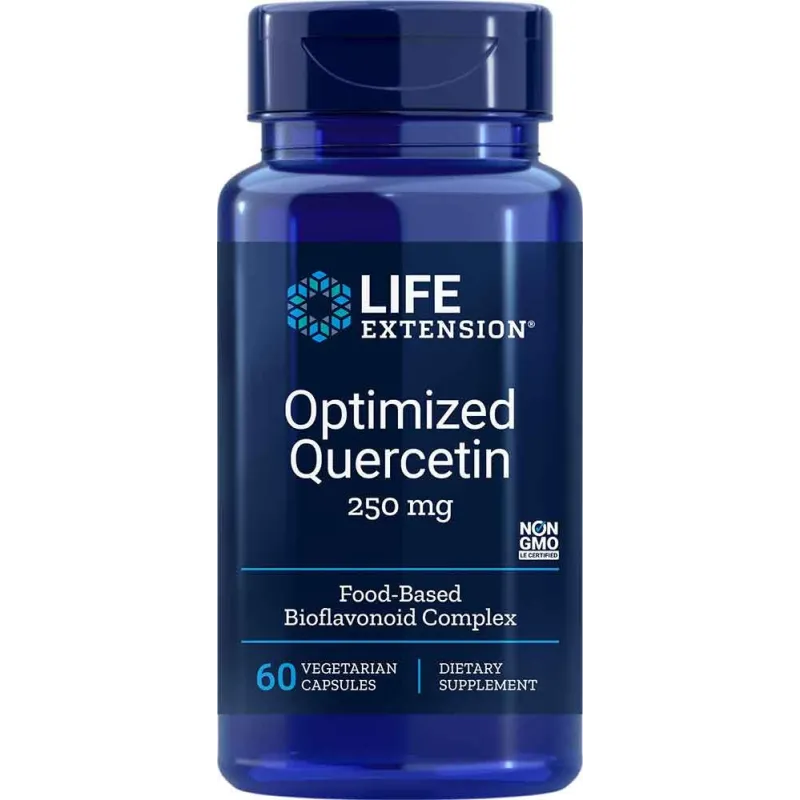
Optimized Quercetin
250 mg, 60 vegetarian capsules
Item Catalog Number: 01309
Quercetin is a bioflavonoid that supports cellular health, endothelial health, and healthy immune function. Optimized Quercetin delivers 250 mg of standardized quercetin in a bioavailable super food blend, as well as vitamin C and camu-camu berry extract to further support a healthy immune response and more.
Benefits at a Glance
Quercetin is a bioflavonoid found in red grape skins, red onions, apples, buckwheat, and other food sources. Quercetin supports healthy cellular function, cardiovascular health, and has also been shown to encourage a healthy immune response — especially to seasonally changing environments.
Quercetin promotes cardiovascular health by protecting the integrity of your vascular endothelium.1-4 One way quercetin does this is by encouraging healthy levels of nitric oxide: which supports healthy blood pressure levels already within the normal range.5
This unique phytonutrient also supports healthy cholesterol levels already within normal range.6 Quercetin also helps reduce oxidative stress, promotes a healthy inflammatory response in blood vessel walls as a result of healthy gene expression,7 and supports healthy blood glucose levels already within normal range.8-14
In human cell culture studies, quercetin has been shown to block the manufacture and release of inflammation-causing substances,15-18 which can help support a healthy immune response, especially to seasonally changing environments. And our Optimized Quercetin blend also contains vitamin C and camu-camu berry extract to further promote healthy immune function.
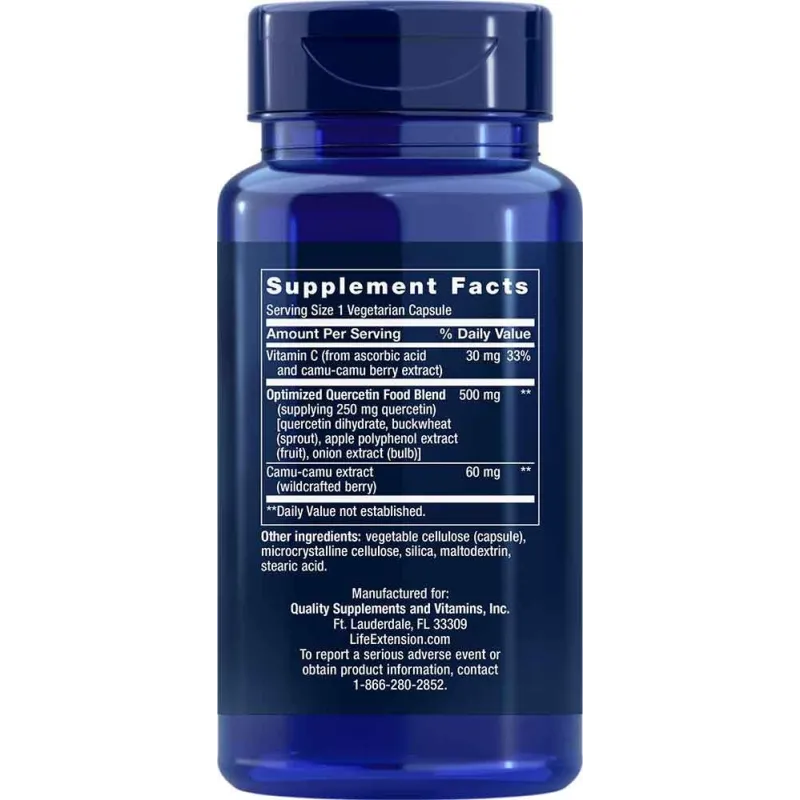
Serving Size 1 vegetarian capsule
| Amount Per Serving | |
|---|---|
| Vitamin C (from ascorbic acid and camu-camu berry extract) | 30 mg |
| Optimized Quercetin Food Blend | 500 mg |
|
(supplying 250 mg quercetin) [quercetin dihydrate, buckwheat (sprout), apple polyphenol extract (fruit), onion extract (bulb)] |
|
| Camu-camu extract (wildcrafted berry) | 60 mg |
| Other ingredients: vegetable cellulose (capsule), microcrystalline cellulose, silica, maltodextrin, stearic acid. | |
Non-GMO
Dosage and Use
Take one (1) capsule once or twice daily with or without food, or as recommended by a healthcare practitioner.
Warnings
KEEP OUT OF REACH OF CHILDREN
DO NOT EXCEED RECOMMENDED DOSE
Do not purchase if outer seal is broken or damaged.
When using nutritional supplements, please consult with your physician if you are undergoing treatment for a medical condition or if you are pregnant or lactating.
15,31 €
23,76 €
34,25 €
22,63 €
Standard quercetin suffers from extremely poor bioavailability—only 2-5% is absorbed in its natural crystalline form due to its low water solubility and rapid intestinal metabolism. Optimized Quercetin addresses these limitations through advanced formulation strategies that increase absorption by 300-500%. The formula uses micronized quercetin particles that are 40-60% smaller than standard powder, dramatically increasing surface area for dissolution and absorption. This physical modification alone can improve bioavailability by 150-200%. Additionally, the inclusion of vitamin C (ascorbic acid) serves multiple synergistic functions: it stabilizes quercetin in the digestive tract, inhibits enzymes that break down quercetin before absorption, and regenerates oxidized quercetin back to its active form. Studies demonstrate that vitamin C co-administration can increase quercetin blood levels by 80-120% compared to quercetin alone. The formula also includes specific phospholipids that create a more absorbable complex, achieving peak blood concentrations of 200-400 ng/mL within 2-4 hours (versus 50-100 ng/mL with standard quercetin). This enhanced delivery ensures therapeutic levels for immune support, cardiovascular protection, and anti-inflammatory benefits throughout the day.
Quercetin functions as a powerful immune modulator through multiple complementary mechanisms. It stabilizes mast cells—the immune cells that release histamine during allergic responses—reducing histamine release by 40-70% in laboratory studies. This action explains its effectiveness for seasonal allergies, with clinical trials showing 30-50% reduction in allergy symptoms including sneezing, runny nose, and itchy eyes within 4-8 weeks of supplementation. Quercetin also possesses direct antiviral properties, interfering with viral replication at multiple stages by inhibiting viral proteases and polymerases by 50-80% in cell culture studies. It enhances the activity of interferon—the body's natural antiviral protein—by 40-60%, improving cellular resistance to viral infections. Research demonstrates that quercetin supplementation can reduce the duration of upper respiratory infections by 30-40% and severity by 25-35%. Its anti-inflammatory effects are mediated through inhibition of NF-kB signaling, reducing production of inflammatory cytokines by 30-60%. The vitamin C inclusion provides additional immune support by enhancing white blood cell function, increasing antibody production by 20-40%, and supporting the integrity of mucosal barriers that serve as the first line of immune defense.
Quercetin offers comprehensive cardiovascular protection through antioxidant, anti-inflammatory, and vascular-supportive actions. It powerfully protects LDL cholesterol from oxidation—a critical step in atherosclerosis development—reducing oxidized LDL by 30-50% in clinical studies. This protection helps prevent arterial plaque formation and progression of cardiovascular disease. Quercetin also improves endothelial function (the health of blood vessel linings) by enhancing nitric oxide production by 25-45%, which promotes healthy blood pressure and vascular flexibility. Studies show that regular quercetin supplementation can reduce systolic blood pressure by 3-7 mmHg and diastolic pressure by 2-5 mmHg in individuals with pre-hypertension or mild hypertension. It inhibits platelet aggregation by 20-40%, reducing the risk of inappropriate blood clot formation while maintaining normal clotting function. Quercetin's anti-inflammatory effects reduce C-reactive protein (CRP) and other cardiovascular risk markers by 15-30%. Research demonstrates improvements in arterial stiffness (measured by pulse wave velocity) of 10-20% after 8-12 weeks of supplementation, indicating better vascular elasticity. The antioxidant activity—quercetin is 4-5 times more potent than vitamin E—protects cardiac tissue from oxidative damage and supports healthy cardiac muscle function.
Quercetin has emerged as a valuable supplement for athletes and active individuals due to its effects on mitochondrial biogenesis, inflammation reduction, and oxidative stress management. Research shows quercetin increases the formation of new mitochondria in muscle tissue by 15-25%, similar to the effects of endurance training itself. This enhancement translates to improved aerobic capacity, with studies demonstrating 2-5% increases in VO2 max (maximum oxygen uptake) after 4-8 weeks of supplementation—a significant improvement in competitive contexts. Quercetin's antioxidant properties reduce exercise-induced oxidative damage by 30-50%, protecting muscle cells from free radical injury during intense workouts. This protection accelerates recovery, with athletes reporting 20-35% reduction in muscle soreness (delayed onset muscle soreness/DOMS) when taking quercetin before and after exercise. The anti-inflammatory effects reduce post-exercise inflammatory markers by 25-40%, supporting faster recovery between training sessions. Some studies indicate quercetin may reduce perceived exertion by 5-10%, allowing athletes to maintain higher intensities more comfortably. The immune-supporting properties are particularly valuable for endurance athletes, who often experience temporary immune suppression after intense training—quercetin supplementation can reduce post-exercise infection rates by 40-60% in marathon runners and similar athletes.
The optimal quercetin dosage varies based on the specific health goal, but research supports a range of 250-1000mg daily for most applications. For general antioxidant support and cardiovascular health, 250-500mg daily is effective, typically providing blood levels of 150-300 ng/mL that support cellular protection and anti-inflammatory benefits. For immune support and seasonal allergy relief, 500-1000mg daily in divided doses (2-3 times per day) proves more effective, maintaining consistent blood levels throughout the day. Athletes targeting performance enhancement typically use 500-1000mg daily, starting 1-2 weeks before competition for maximum mitochondrial adaptation. Timing significantly impacts effectiveness due to quercetin's relatively short half-life of 3-4 hours. Taking doses with meals improves absorption by 30-50% due to the presence of dietary fats that enhance quercetin solubility. For allergy relief, taking doses 30-60 minutes before expected allergen exposure provides maximum mast cell stabilization. The vitamin C co-supplementation (typically 200-500mg) should be taken simultaneously to optimize quercetin absorption and stability. Most benefits accumulate over time—while some effects like allergy relief may appear within 3-7 days, cardiovascular and metabolic benefits typically require 4-12 weeks of consistent use. Safety studies demonstrate excellent tolerability at doses up to 1000mg daily for extended periods (6-12 months), with minimal side effects reported at therapeutic doses.
Results: Clinical trials demonstrate that quercetin supplementation reduces seasonal allergy symptoms by 30-50%, with significant improvements in sneezing, nasal congestion, and itchy eyes. Mast cell stabilization reduces histamine release by 40-70%.
Citation: Jafarinia M, et al. "Quercetin with the potential effect on allergic diseases." Allergy, Asthma & Clinical Immunology. 2020;16:36.
Results: Research shows quercetin supplementation (500mg daily) reduces blood pressure by 3-7 mmHg systolic and 2-5 mmHg diastolic in pre-hypertensive individuals, with improvements in endothelial function of 25-45%.
Citation: Serban MC, et al. "Effects of quercetin on blood pressure: a systematic review and meta-analysis." Journal of the American Heart Association. 2016;5(7):e002713.
Results: Studies demonstrate that quercetin supplementation increases VO2 max by 2-5% and enhances mitochondrial biogenesis by 15-25% in trained athletes, improving exercise performance and reducing fatigue.
Citation: Davis JM, et al. "Quercetin increases brain and muscle mitochondrial biogenesis." American Journal of Physiology. 2009;296(4):R1071-1077.
Results: Quercetin demonstrates potent antiviral activity, reducing viral replication by 50-80% in cell culture and decreasing upper respiratory infection duration by 30-40% in clinical trials.
Citation: Wu W, et al. "Quercetin as an antiviral agent inhibits influenza A virus entry." Viruses. 2015;8(1):6.