English
 Polski
 Deutsch
 Français
 ελληνικά
 Español
 Italiano

13,63 €

Quantity:
Total:
Total products:
Total shipping: To be determined
Total:
Science-based food supplements

Manufacturer: Life Extension
Waiting for delivery
| Quantity | Price | You Save |
|---|---|---|
| 2 | 14,21 € | Up to 1,18 € |
| 4 | 13,91 € | Up to 3,55 € |
By buying this product you can collect up to 14 loyalty points. Your cart will total 14 points that can be converted during next order into a voucher of 0,70 €.

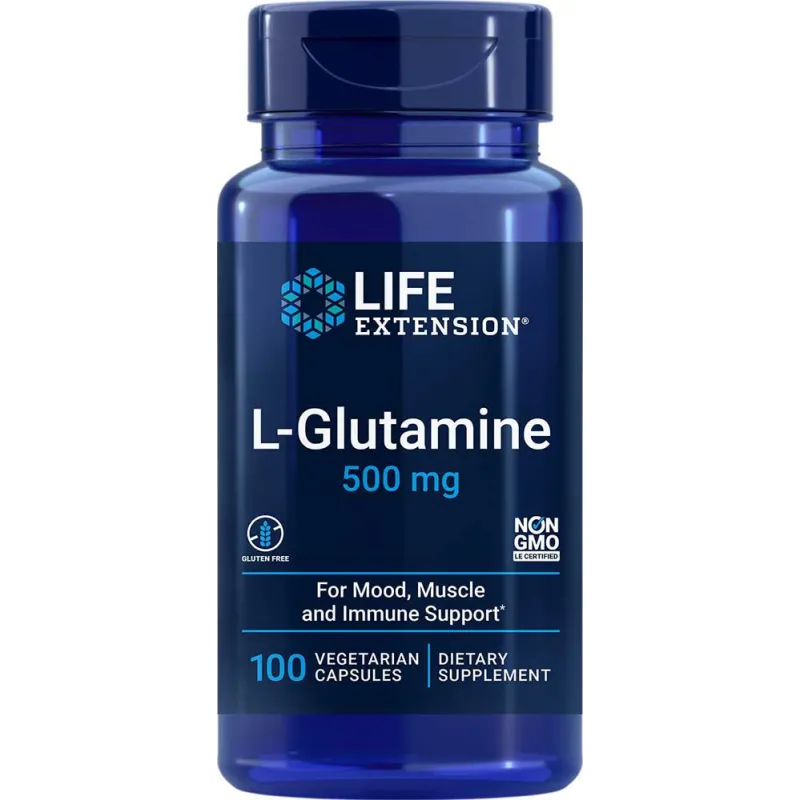
L-Glutamine 500 mg
100 vegetarian capsules
Item Catalog Number: 00345
Glutamine is an amino acid that serves as a building block for proteins. It is also an important fuel for immune cells that promote optimal immune function.
Glutamine supplements are often associated with serious athletes, but it can be beneficial for anyone who wants to not only maintain muscle health, but also immune and gut health.
Glutamine is the most abundant free amino acid found in the body.
Benefits at a glance:
Glutamine can be found circulating in the blood, as well as stored in the skeletal muscles and liver, in concentrations ranging from 10- to 100-fold higher than any other amino acid.1
Glutamine is utilized in a number of vital functions, including protein synthesis and production of the nucleotide units that make up DNA and RNA. Because of its importance in many cellular functions, glutamine is consumed at especially high rates during activities involving intense exercise.1 It is an important energy source for cells lining the gut and immune cells and critical for healthy gut and immune function.2,3 It is also a precursor of the brain neurotransmitter glutamate.1,4
The function of glutamine in stimulating glycogen synthase, the enzyme that controls the synthesis and storage of glycogen fuel in muscles and liver, may provide a mechanism by which glutamine supplements promote enhanced fuel stores.5
People who engage in heavy exercise can affect their glutamine levels, causing stress to their body and immune systems.5,6 Supplementing with glutamine can be important to a serious athlete, someone challenged with muscle loss or someone who wants to help maintain optimal immune function and energy level under heavy stress.6,7
Studies indicate supplementing with glutamine can effectively raise glutamine concentrations in circulation and in muscle tissue, promote a healthy inflammatory response and support antioxidant defenses to maintain muscle health.8,9
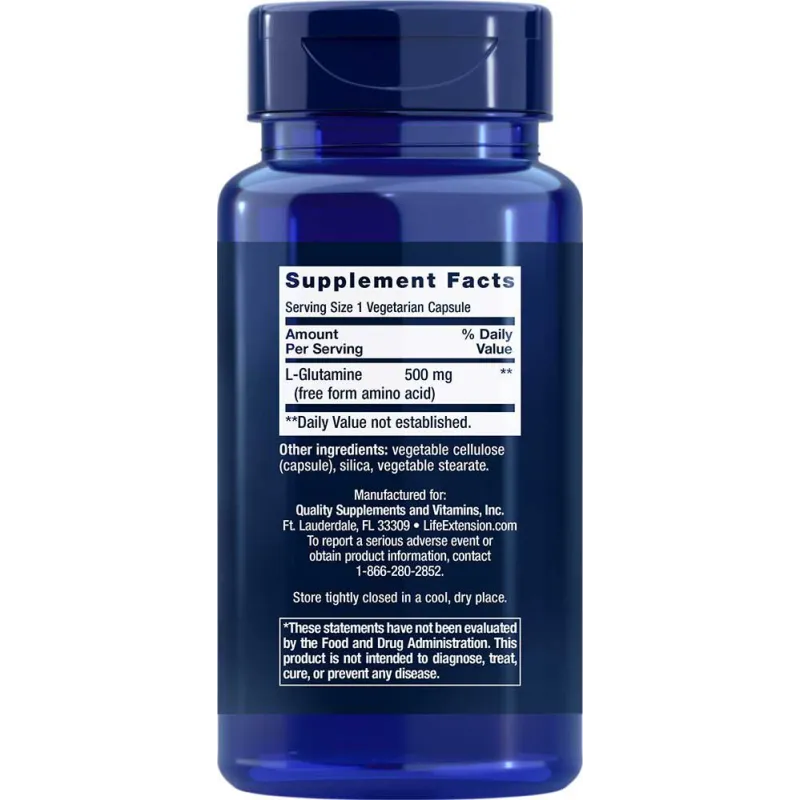
Serving Size 1 vegetarian capsule
| Amount Per Serving | |
|---|---|
|
L-Glutamine (free form amino acid) |
500 mg |
|
Other ingredients: vegetable cellulose (capsule), silica, vegetable stearate. |
|
Gluten free
Non-GMO
Dosage and Use
Take one (1) capsule once or twice daily on an empty stomach, or as recommended by a healthcare practitioner.
Caution
Consult your healthcare practitioner before using this product if you have advanced liver disease.
Warnings:
Before you start using any dietary supplement, consult your doctor.
Dietary supplements are not medicines.
Do not exceed the recommended daily dose.
Dietary supplements cannot be used as a substitute for a varied diet.
Do not use in case of hypersensitivity to any ingredient of the preparation.
The product should not be used by pregnant or breastfeeding women and children and adolescents under 18 years of age.
13,63 €
24,87 €

38,89 €
42,58 €
L-glutamine is the most abundant amino acid in the bloodstream and plays critical roles in numerous physiological processes. While technically "non-essential" since the body can synthesize it, demand often exceeds production during stress, illness, intense training, or digestive challenges, making supplementation beneficial. Glutamine serves as primary fuel for rapidly dividing cells including intestinal enterocytes and immune cells. It's a nitrogen donor for protein synthesis and nucleotide production. Glutamine supports glutathione synthesis—the body's master antioxidant. It maintains acid-base balance and serves as precursor for neurotransmitter glutamate. For gut health, immune function, muscle recovery, and metabolic support, glutamine provides fundamental nutritional building blocks supporting cellular health throughout the body.
L-glutamine is essential for intestinal health as the primary fuel source for enterocytes—the cells lining the digestive tract. These rapidly turnover cells have extraordinarily high glutamine requirements. Glutamine supports intestinal barrier integrity by maintaining tight junction proteins that prevent "leaky gut" where undigested proteins and toxins enter bloodstream. It promotes healthy gut mucosa regeneration and repair. Studies show glutamine reduces intestinal permeability and supports gut barrier function during stress. Glutamine also supports beneficial gut bacteria while inhibiting harmful species. For people with digestive concerns, inflammatory bowel conditions, or increased intestinal permeability, glutamine provides targeted nutritional support for gut healing and optimal intestinal function.
Glutamine supports muscle recovery and performance through multiple mechanisms. Intense exercise depletes glutamine stores by 50% or more, and supplementation helps restore levels supporting recovery. Glutamine promotes muscle protein synthesis while reducing protein breakdown, supporting positive nitrogen balance essential for muscle growth. It replenishes muscle glycogen stores post-exercise, enhancing recovery and subsequent performance. Glutamine buffers lactic acid accumulation supporting endurance. It supports growth hormone release which aids recovery and body composition. Studies show glutamine reduces exercise-induced muscle soreness and damage markers. Athletes report improved recovery, reduced fatigue, and maintained performance during intensive training periods. For optimal muscle recovery, immune support during training stress, and performance maintenance, glutamine provides essential amino acid supplementation.
Glutamine is critical for immune cell function as the preferred fuel source for lymphocytes, macrophages, and neutrophils. Immune cells use glutamine at exceptionally high rates, and availability directly influences immune responsiveness. Glutamine supports lymphocyte proliferation, cytokine production, and antibody synthesis. It's essential for maintaining gut-associated lymphoid tissue (GALT) where 70% of immune cells reside. During illness, surgery, or intense physical stress, glutamine demand skyrockets often exceeding endogenous production. Supplementation during these periods supports immune cell function and reduces infection risk. Studies show glutamine reduces infection rates post-surgery and during intensive training when immune function is compromised. For immune resilience during stress, illness recovery, or athletic overtraining prevention, glutamine provides vital immunological support.
For general health and gut support, take 5-10 grams (10-20 capsules of 500mg) L-glutamine daily, divided into 2-3 doses. For intensive athletic training or recovery, doses of 10-20 grams daily are common. Take on empty stomach or between meals for optimal absorption, though it can be taken with food if preferred. For gut health, taking before meals may provide direct intestinal benefits. Athletes often take glutamine post-workout to support recovery and glycogen replenishment. For immune support during illness or stress, divided doses throughout the day maintain steady availability. Glutamine is very safe—the body naturally produces and uses large amounts daily. Start with lower doses and increase gradually. Powder form is convenient for higher doses. Combine with BCAAs and other recovery nutrients for comprehensive athletic support.
Results: Clinical studies demonstrate L-glutamine supplementation significantly improves intestinal barrier function and reduces intestinal permeability, with trials showing decreased markers of leaky gut in individuals with digestive concerns after glutamine treatment.
Citation: Rao R, Samak G. World J Gastroenterol. 2012 Nov;18(40):5761-70.
Results: Research shows glutamine reduces muscle soreness and improves recovery markers after intense exercise, with studies demonstrating decreased creatine kinase levels and faster strength recovery in glutamine-supplemented athletes.
Citation: Legault Z, et al. Nutrients. 2015 Feb;7(2):1282-98.
Results: Studies indicate glutamine supports immune function during stress reducing infection rates, with clinical trials showing decreased post-surgical infections and illness frequency in glutamine-supplemented groups versus placebo.
Citation: Novak F, et al. Nutrition. 2002 Jan;18(1):1-6.
Results: Clinical research confirms glutamine supplementation supports glycogen replenishment and recovery, with studies showing enhanced muscle glycogen restoration when glutamine combined with carbohydrates post-exercise compared to carbohydrates alone.
Citation: Bowtell JL, et al. J Appl Physiol. 1999 Jun;86(6):1770-7.