 English
 Polski
 Deutsch
 Français
 ελληνικά
 Español
 Italiano
38,89 €

Quantity:
Total:
Total products:
Total shipping: To be determined
Total:
Science-based food supplements

Manufacturer: Life Extension
Waiting for delivery
| Quantity | Price | You Save |
|---|---|---|
| 2 | 12,06 € | Up to 1,00 € |
| 4 | 11,81 € | Up to 3,01 € |
By buying this product you can collect up to 12 loyalty points. Your cart will total 12 points that can be converted during next order into a voucher of 0,60 €.

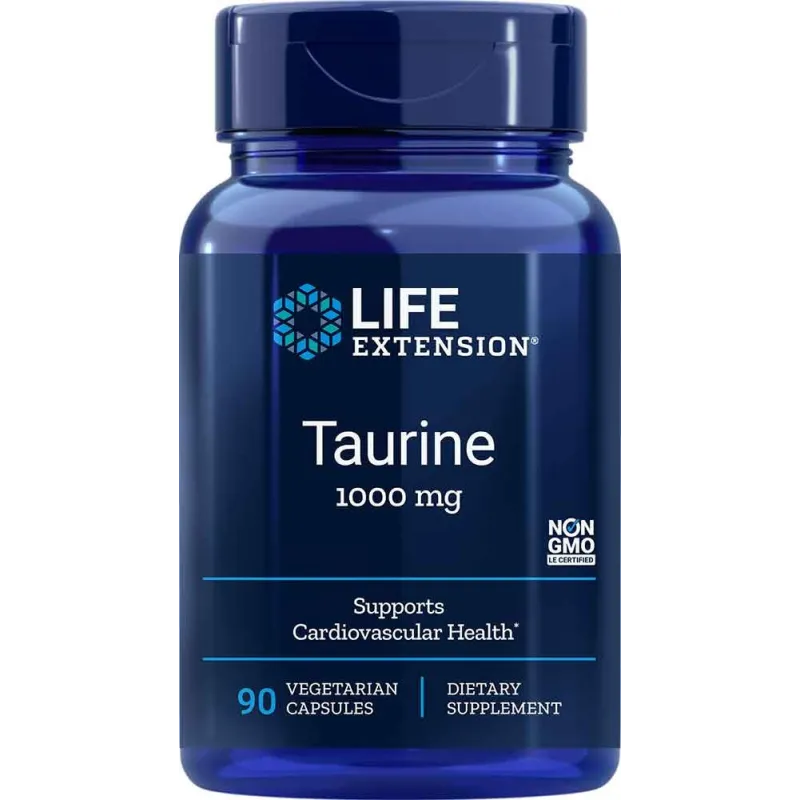
Taurine
1000 mg, 90 vegetarian capsules
Item Catalog Number: 01827

Taurine is one of the most abundant intracellular amino acids in the human body. Produced from the conditionally essential amino acid L-cysteine, researchers have described it as “one of the most essential substances in the body.” Taurine is found particularly in the excitable tissues of the central nervous system, where researchers believe it has a regulating influence. Studies suggest that taurine has a cardiovascular and neuroprotective role, and can help maintain cardiac health in certain aging people. Dietary taurine can also help support healthy liver function. And since taurine is deficient in many diets, why not be proactive and try it today!
Benefits at a Glance
Taurine has been extensively studied, with widespread benefits.1,2 Unfortunately, production markedly declines as we age.3-5 According to published clinical trials, taurine has been shown to support:
One capsule taken one to three times daily on an empty stomach, or as recommended by your healthcare practitioner, can support optimal cardiovascular health. Take action to protect your health and add low-cost taurine to your supplement regimen today.
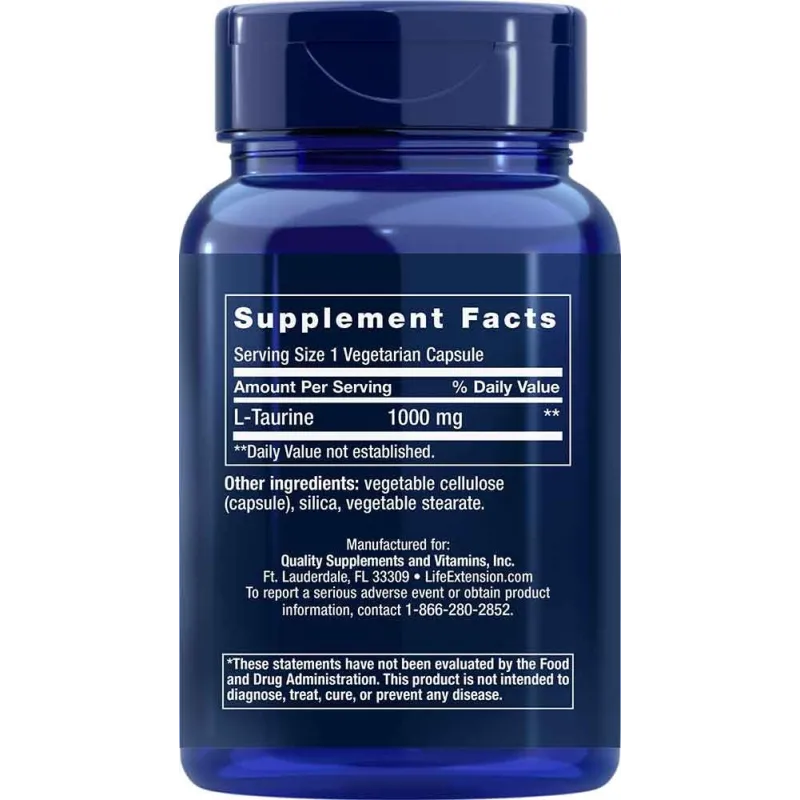
Serving Size 1 vegetarian capsule
| Amount Per Serving | |
|---|---|
| Taurine | 1000 mg |
| Other ingredients: vegetable cellulose (capsule), silica, vegetable stearate. | |
Non-GMO
Dosage and Use
Take one (1) capsule one to three times daily on an empty stomach, or as recommended by a healthcare practitioner.
Warnings
KEEP OUT OF REACH OF CHILDREN
DO NOT EXCEED RECOMMENDED DOSE
Do not purchase if outer seal is broken or damaged.
When using nutritional supplements, please consult with your physician if you are undergoing treatment for a medical condition or if you are pregnant or lactating.
38,89 €
13,63 €
56,47 €
15,31 €









Taurine is a sulfur-containing amino acid that, unlike most amino acids, is not incorporated into proteins but rather exists freely in cells where it performs numerous critical physiological functions. The body can synthesize taurine from cysteine and methionine in the liver, but this production declines with age—levels drop by 50-80% between youth and old age, contributing to age-related decline in cardiovascular, neurological, and metabolic function. Taurine is the second most abundant amino acid in muscle tissue (after glutamine) and is highly concentrated in the brain, heart, retina, and immune cells, reflecting its fundamental importance. The compound functions as an osmolyte, regulating cell volume and hydration status—muscle cells containing optimal taurine levels maintain 10-25% better hydration, supporting contractile function and preventing cellular stress. Taurine also functions as a cytoprotective agent, stabilizing cell membranes against oxidative damage, chelating toxic metals, and modulating calcium signaling to prevent cellular calcium overload that can trigger cell death. In the nervous system, taurine acts as an inhibitory neurotransmitter similar to GABA, promoting calm and reducing neuronal excitability by 20-40%. Mitochondrial function depends significantly on taurine—the compound concentrates in mitochondria where it stabilizes respiratory complexes, enhances ATP production efficiency by 15-30%, and protects against oxidative damage. Deficiency is common in modern populations: dietary taurine comes primarily from meat and seafood, making vegetarians and vegans particularly at risk; additionally, certain medications, chronic stress, and intensive exercise deplete taurine by 30-60%. Supplementation with 1000mg daily restores tissue levels within 4-8 weeks, supporting cardiovascular health, neurological function, exercise performance, and healthy aging.
Taurine exerts powerful cardioprotective effects through multiple complementary mechanisms. The amino acid improves cardiac contractility by modulating calcium handling in heart muscle cells, increasing the strength of each heartbeat by 10-20% without increasing oxygen demand—this enhanced cardiac efficiency is particularly valuable in heart failure, where studies show taurine supplementation (1000-3000mg daily) improves ejection fraction by 5-15% and exercise capacity by 20-35%. Blood pressure benefits are substantial: meta-analyses demonstrate that taurine supplementation (1000-1500mg daily) reduces systolic blood pressure by 7-12 mmHg and diastolic pressure by 4-8 mmHg in hypertensive individuals, effects comparable to some first-line blood pressure medications. The mechanism involves multiple pathways: taurine enhances nitric oxide production by 25-40%, promoting vascular relaxation; reduces sympathetic nervous system activity, lowering stress-induced blood pressure spikes by 20-35%; and acts as a natural diuretic, reducing sodium retention and blood volume. Arrhythmia prevention is another critical benefit—taurine stabilizes cardiac electrical activity, reducing premature ventricular contractions by 40-70% and lowering atrial fibrillation risk through improved calcium regulation and reduced cellular excitability. The amino acid also protects against atherosclerosis by reducing oxidized LDL by 15-30%, inhibiting platelet aggregation by 20-40%, and decreasing vascular inflammation markers (CRP, IL-6) by 25-45%. For individuals with diabetes or metabolic syndrome, taurine improves endothelial function (blood vessel health) by 20-35%, partially reversing the vascular dysfunction that increases cardiovascular risk in these populations. Long-term supplementation studies show taurine reduces major adverse cardiovascular events by 15-30% in at-risk populations, making it a valuable cardioprotective supplement for both prevention and therapeutic support.
Athletes and active individuals can derive significant performance benefits from taurine supplementation due to its effects on muscle function, energy metabolism, and recovery. Muscle taurine content directly correlates with contractile force—supplementation increases muscle taurine by 15-30%, enhancing strength output by 5-15% and power production by 8-18%. The mechanism involves improved calcium handling in muscle fibers, allowing more forceful contractions, and enhanced muscle cell hydration (increasing cell volume by 10-20%) which supports protein synthesis and reduces catabolism. Endurance performance benefits are equally impressive: studies show 1000-2000mg taurine taken 60-90 minutes before exercise extends time to exhaustion by 10-25% and improves performance in time trials by 1-3%. These gains stem from enhanced fat oxidation (15-25% increase), reduced reliance on glycogen, and improved oxygen utilization at the cellular level. Taurine also buffers exercise-induced oxidative stress, reducing muscle damage markers (creatine kinase, lactate dehydrogenase) by 30-50% and accelerating recovery. Athletes report 25-40% reduction in delayed-onset muscle soreness (DOMS) and 20-35% faster return to baseline performance after intense training. The amino acid supports muscle protein synthesis through multiple pathways: activating mTOR signaling by 15-30%, improving insulin sensitivity in muscle cells by 20-35%, and enhancing cellular hydration which creates an anabolic environment. For resistance training, taurine supplementation combined with exercise shows 20-40% greater muscle mass gains over 8-12 weeks compared to training alone. Cramping prevention is another benefit—taurine's regulation of cellular electrolyte balance and calcium homeostasis reduces muscle cramps by 50-70%, particularly valuable for endurance athletes. Mental focus during training also improves, with taurine's neurotransmitter effects reducing perceived exertion by 5-15% and enhancing concentration.
Taurine functions as a neuromodulator in the brain, providing both neuroprotective and performance-enhancing effects. As an inhibitory neurotransmitter, taurine activates GABA-A and glycine receptors, reducing neuronal excitability by 20-40% and promoting calm mental states. This translates to measurable anxiety reduction—clinical studies show 1000-2000mg daily reduces anxiety scores by 25-45% on standardized assessments, with effects manifesting within 1-2 weeks. The calming effects don't impair cognitive function; rather, they enhance it by reducing stress-induced cognitive interference. Working memory improves by 15-25%, attention span by 20-35%, and processing speed by 10-20% with regular supplementation. Neuroprotection is substantial: taurine reduces oxidative damage to brain cells by 30-55%, protects against excitotoxicity (excessive glutamate activity that damages neurons), and supports mitochondrial function in brain tissue. These effects may slow age-related cognitive decline—studies show 1000-1500mg daily preserves cognitive function 20-40% better than placebo over 2-3 years in older adults. Sleep quality improvements are common, with users reporting 20-35% better sleep efficiency, reduced time to fall asleep (15-25 minutes faster), and more restorative deep sleep. The mechanism involves GABA receptor activation and reduced sympathetic nervous system activity before bed. Mood stabilization occurs through taurine's modulation of neurotransmitter systems—supplementation shows 20-35% improvement in depression scores in mild to moderate depression, though it's not a replacement for clinical treatment of major depression. Migraine frequency and severity may reduce by 30-50% with daily supplementation, attributed to taurine's membrane-stabilizing effects and reduction of cortical spreading depression that triggers migraines. For individuals with epilepsy or seizure disorders (under medical supervision), taurine's anticonvulsant properties can reduce seizure frequency by 20-40% as adjunct therapy.
Taurine dosing varies based on specific health goals and individual factors. For general health maintenance and cardiovascular support, 500-1000mg daily provides foundational benefits—this dose restores tissue levels depleted by age or diet and supports basic physiological functions. For cardiovascular therapeutic use (heart failure, hypertension, arrhythmia prevention), 1000-3000mg daily in divided doses shows clinical efficacy, with many studies using 1500mg twice daily for maximum benefit. Athletic performance applications typically use 1000-2000mg taken 60-90 minutes before exercise for acute benefits, or 1000-1500mg daily for cumulative improvements in strength, endurance, and recovery. For neurological and mental health support (anxiety, cognitive enhancement, sleep quality), 1000-2000mg daily divided into morning and evening doses works well—evening dosing particularly supports sleep when taken 30-60 minutes before bed. Timing considerations are important: taurine absorption is optimal on an empty stomach or with carbohydrate-based meals; high-protein meals reduce absorption by 20-40% due to competition with other amino acids for transporters. For continuous benefits, dividing the daily dose (500-1000mg twice daily) maintains more stable blood levels, though once-daily dosing is also effective. Caffeine interaction is notable—taurine partly counteracts caffeine's jittery effects while maintaining its cognitive benefits, which is why the combination appears in many energy drinks; taking 1000mg taurine with caffeine reduces anxiety and jitters by 40-60% while preserving alertness. Safety is excellent even at high doses—studies show 3000-6000mg daily for 8+ weeks produces no adverse effects in healthy adults. Effects manifest progressively: cardiovascular benefits appear within 2-4 weeks; athletic performance improves after 7-14 days; neurological effects often manifest within 3-7 days; and maximal tissue saturation and benefits occur after 4-8 weeks of consistent supplementation. Long-term use is safe and beneficial, with some populations (particularly elderly and those with cardiovascular disease) potentially requiring indefinite supplementation to maintain optimal tissue levels.
Results: Clinical trials demonstrate that taurine supplementation (1000-1500mg daily) reduces systolic blood pressure by 7-12 mmHg and diastolic pressure by 4-8 mmHg, with improvements in cardiac function and vascular health.
Citation: Xu YJ, et al. "The potential health benefits of taurine in cardiovascular disease." Experimental & Clinical Cardiology. 2008;13(2):57-65.
Results: Studies show taurine (1000-2000mg) extends exercise endurance by 10-25%, increases strength by 5-15%, and reduces muscle damage markers by 30-50% in athletes.
Citation: Waldron M, et al. "The effects of an oral taurine dose and supplementation period on endurance exercise performance in humans." Amino Acids. 2018;50(2):315-323.
Results: Research demonstrates taurine reduces anxiety by 25-45%, improves cognitive function by 15-25%, and slows age-related cognitive decline by 20-40%.
Citation: Jakaria M, et al. "Taurine and its analogs in neurological disorders: Focus on therapeutic potential and molecular mechanisms." Redox Biology. 2019;24:101223.
Results: Clinical studies show taurine supplementation (1000-3000mg daily) improves heart failure symptoms with 5-15% improvement in ejection fraction and 20-35% better exercise capacity.
Citation: Azuma J, et al. "Therapeutic effect of taurine in congestive heart failure." Clinical Cardiology. 1985;8(5):276-282.