English
 Polski
 Deutsch
 Français
 ελληνικά
 Español
 Italiano
12,46 €

Quantity:
Total:
Total products:
Total shipping: To be determined
Total:
Science-based food supplements

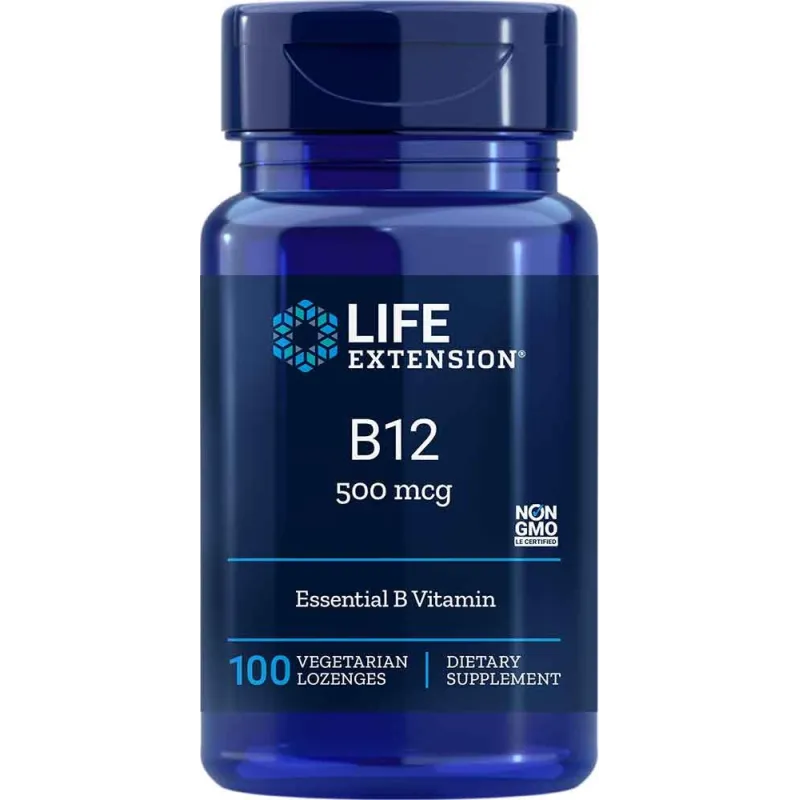
Manufacturer: Life Extension
In stock
| Quantity | Price | You Save |
|---|---|---|
| 2 | 10,73 € | Up to 0,89 € |
| 4 | 10,51 € | Up to 2,68 € |
By buying this product you can collect up to 11 loyalty points. Your cart will total 11 points that can be converted during next order into a voucher of 0,55 €.

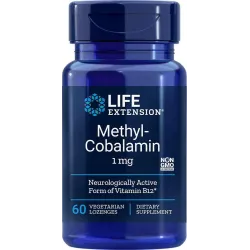
Vitamin B12
500 mcg, 100 lozenges
Item Catalog Number: 00361EU
 Vitamin B12 is present in foods of animal origin, including dairy products and eggs. Thus, vegetarians are more susceptible to a dietary deficiency of this important nutrient.1 Likewise, vitamin B12 serum concentrations are reported to be significantly lower in elderly population groups compared to younger groups.2-5
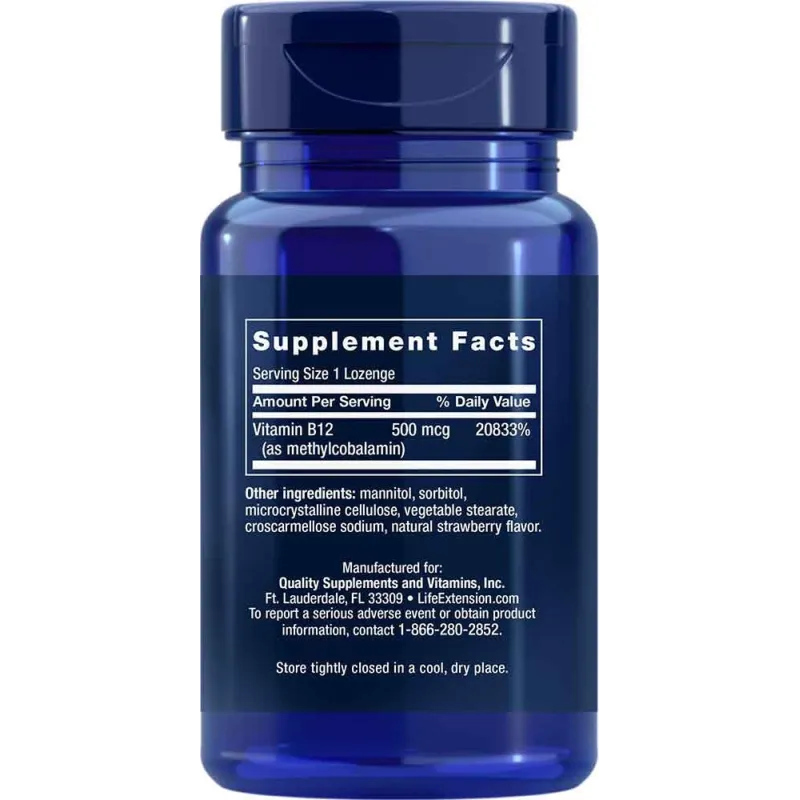
Serving Size 1 lozenge
| Amount Per Serving | |
|---|---|
| Vitamin B12 (as methylcobalamin) | 500 mcg |
| Other ingredients: mannitol, sorbitol, microcrystalline cellulose, vegetable stearate, croscarmellose sodium, natural strawberry flavor. | |
Non-GMO
Dosage and Use
Take one (1) lozenge one to four times daily with or without food, or as recommended by a healthcare practitioner.
Place lozenge in mouth and allow to dissolve, then swallow.
Warnings
KEEP OUT OF REACH OF CHILDREN
DO NOT EXCEED RECOMMENDED DOSE
Do not purchase if outer seal is broken or damaged.
When using nutritional supplements, please consult with your physician if you are undergoing treatment for a medical condition or if you are pregnant or lactating.
12,46 €
14,51 €
27,04 €
28,41 €
Vitamin B12, also called cobalamin, is a water-soluble vitamin essential for numerous bodily functions. It plays critical roles in red blood cell formation, DNA synthesis, neurological function, and energy metabolism. B12 is unique among vitamins because it contains cobalt and is required for proper functioning of all cells, particularly affecting DNA synthesis and regulation, fatty acid synthesis, and energy production. The body cannot produce B12, so it must be obtained from diet or supplements. B12 deficiency can lead to anemia, neurological problems, fatigue, and cognitive issues, making adequate intake crucial for overall health and wellbeing.
Several groups face increased B12 deficiency risk. Vegetarians and especially vegans often lack adequate B12 since it's naturally found primarily in animal products. Adults over 50 frequently have reduced stomach acid production, impairing B12 absorption from food. People taking proton pump inhibitors or metformin for extended periods may have reduced B12 absorption. Individuals with digestive disorders like Crohn's disease, celiac disease, or those who've had gastric surgery often cannot absorb B12 properly. Those with pernicious anemia lack intrinsic factor needed for B12 absorption. Pregnant and nursing women have increased B12 requirements. These groups should consider B12 supplementation and regular monitoring of B12 levels.
B12 deficiency symptoms can develop gradually and vary in severity. Common symptoms include persistent fatigue and weakness, shortness of breath, pale or yellowish skin, and smooth tongue. Neurological symptoms may include numbness or tingling in hands and feet, balance problems, depression, confusion, and memory difficulties. Some people experience mood changes, irritability, or difficulty concentrating. In severe cases, B12 deficiency can cause megaloblastic anemia, characterized by abnormally large red blood cells. Long-term deficiency may lead to irreversible nerve damage. Because symptoms can be subtle initially and overlap with other conditions, anyone experiencing these symptoms should have B12 levels tested, especially if they're in a high-risk group.
B12 supplementation provides numerous health benefits, particularly for those with deficiency or at risk. It supports energy production at the cellular level, helping reduce fatigue and improve physical performance. B12 is essential for healthy nervous system function, supporting nerve health and cognitive function including memory and concentration. It plays crucial roles in red blood cell formation, preventing anemia and supporting oxygen delivery throughout the body. B12 supports cardiovascular health by helping maintain healthy homocysteine levels. The vitamin supports mood regulation and may help maintain emotional wellbeing. B12 also supports DNA synthesis, cell division, and overall cellular health, making it fundamental for maintaining optimal health across all body systems.
For optimal absorption, take B12 supplements on an empty stomach if possible, as food can interfere with absorption. However, if you experience stomach upset, taking with food is acceptable. The 500 mcg dose is suitable for maintenance and mild deficiency. For sublingual or dissolving tablets, allow them to dissolve completely under the tongue for enhanced absorption directly into the bloodstream, bypassing digestive processes. Take B12 consistently at the same time each day, preferably in the morning as it supports energy production. If you have severe deficiency, your healthcare provider may recommend higher doses initially. B12 is water-soluble, so excess is excreted, making it very safe. Combine with other B vitamins for comprehensive B-complex support and optimal metabolic function.
Results: Clinical studies demonstrate vitamin B12 supplementation effectively corrects deficiency and improves associated symptoms including fatigue, weakness, and neurological issues, with most patients showing significant improvements within 6-12 weeks of adequate supplementation.
Citation: Stabler SP. N Engl J Med. 2013 Jan;368(2):149-60.
Results: Research shows B12 plays essential role in homocysteine metabolism, with supplementation significantly reducing elevated homocysteine levels—an independent cardiovascular risk factor—by 20-30% in individuals with elevated levels or deficiency.
Citation: Selhub J, et al. JAMA. 1993 Dec;270(22):2693-8.
Results: Studies indicate B12 deficiency affects cognitive function, with supplementation improving memory, concentration, and mental clarity in deficient individuals, particularly beneficial for older adults with age-related cognitive decline.
Citation: Smith AD, et al. PLoS One. 2010 Sep;5(9):e12244.
Results: Clinical trials confirm oral B12 supplementation is effective even in individuals with absorption issues, with high oral doses (500-1000 mcg daily) achieving adequate B12 status comparable to injections in most cases.
Citation: Kuzminski AM, et al. Blood. 1998 Jan;92(4):1191-8.