


 English
 Polski
 Deutsch
 Français
 ελληνικά
 Español
 Italiano
56,47 €

Quantity:
Total:
Total products: 111,27 €
Total shipping: To be determined
Total: 111,27 €
Science-based food supplements

Manufacturer: Life Extension
In stock
| Quantity | Price | You Save |
|---|---|---|
| 2 | 48,26 € | Up to 4,02 € |
| 4 | 47,25 € | Up to 12,06 € |
By buying this product you can collect up to 50 loyalty points. Your cart will total 161 points that can be converted during next order into a voucher of 8,05 €.

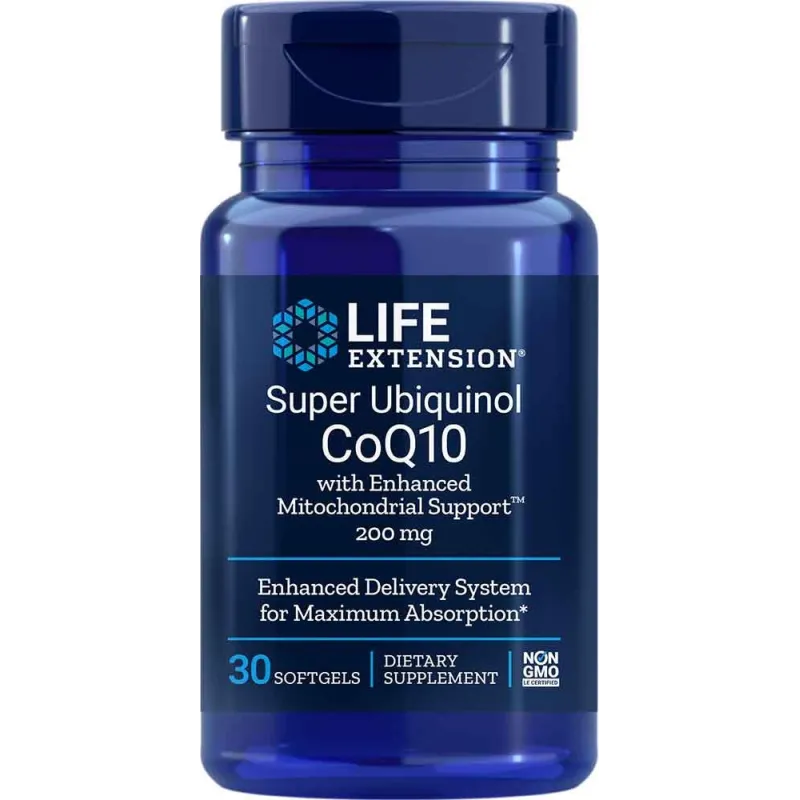
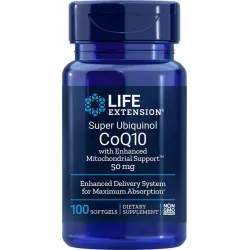
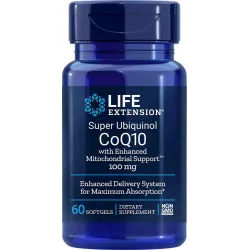
Super Ubiquinol CoQ10 with Enhanced Mitochondrial Support™
200 mg, 30 softgels
Item Catalog Number: 01431
 Super Ubiquinol CoQ10 with Enhanced Mitochondrial Support™ is formulated with ubiquinol, a highly bioavailable form of coenzyme Q10 nutrient, and augmented with the adaptogen PrimaVie® shilajit, clinically shown to further increase CoQ10 absorption, promote cardiovascular health, and help restore youthful cellular energy.
Benefits at a Glance:
Research supports the value of this unique combination of ubiquinol CoQ10 and shilajit. That’s why we’ve created Super Ubiquinol CoQ10 with Enhanced Mitochondrial Support™, to create a powerful synergy that supports heart health and youthful cellular energy production better than CoQ10 alone.
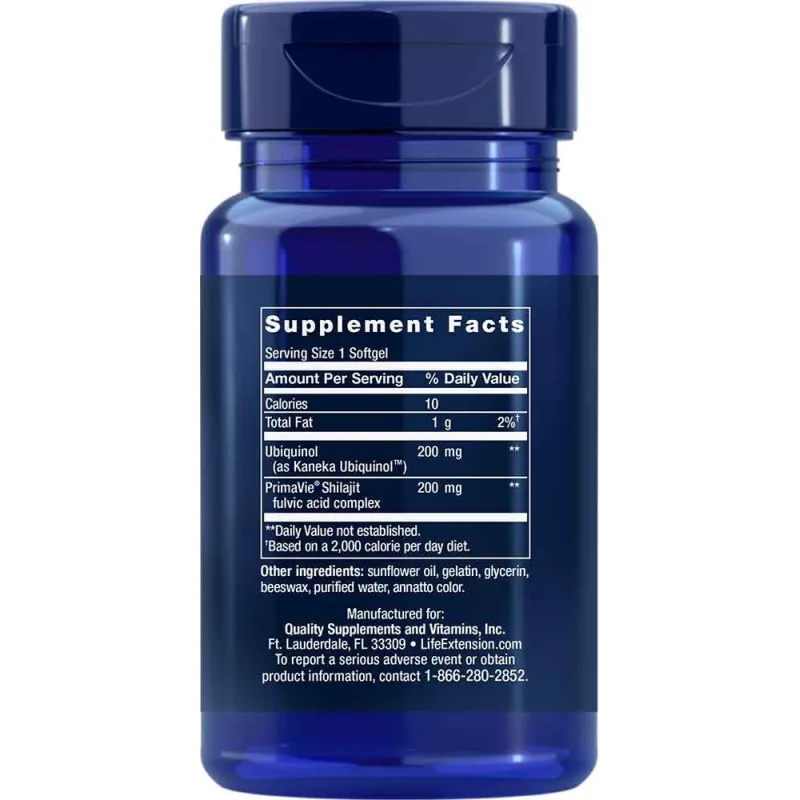
Serving Size 1 softgel
| Amount Per Serving | |
|---|---|
| Calories | 10 |
|
Calories from Fat |
10 |
| Total Fat | 1 g |
| Ubiquinol (as Kaneka Ubiquinol™) | 200 mg |
| PrimaVie® Shilajit fulvic acid complex | 200 mg |
| Other ingredients: sunflower oil, gelatin, glycerin, beeswax, purified water, annatto color. | |
Non-GMO
PrimaVie® is a registered trademark of Natreon, Inc.
Q+®, Kaneka Ubiquinol™, and the quality seal™ are registered or pending trademarks of Kaneka Corp.
Dosage and Use
Take one (1) softgel with food daily, or as recommended by a healthcare practitioner.
Warnings
KEEP OUT OF REACH OF CHILDREN
DO NOT EXCEED RECOMMENDED DOSE
Do not purchase if outer seal is broken or damaged.
When using nutritional supplements, please consult with your physician if you are undergoing treatment for a medical condition or if you are pregnant or lactating.
56,47 €
38,89 €
13,63 €
40,55 €
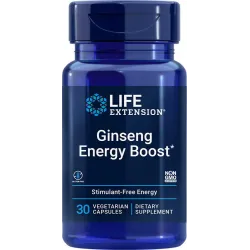
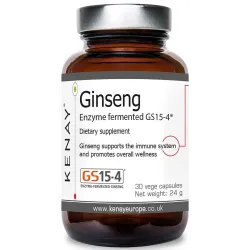
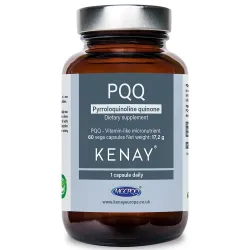


Ubiquinol represents the active, reduced form of Coenzyme Q10 that cells actually use for energy production and antioxidant protection, whereas ubiquinone (conventional CoQ10) must be converted to ubiquinol before the body can utilize it. This conversion process becomes progressively less efficient with age—by age 40, conversion efficiency may decline by 30-50%, and by age 60-70, it can be 50-70% less efficient than in youth. Ubiquinol supplementation bypasses this conversion bottleneck entirely, delivering the bioactive form directly. Absorption studies demonstrate that ubiquinol achieves blood plasma levels 3-8 times higher than equivalent doses of ubiquinone, with peak concentrations reaching 200-400% higher levels. This superior bioavailability means that 100mg of ubiquinol provides benefits equivalent to 300-800mg of ubiquinone. The difference is particularly pronounced in older adults and individuals taking statin medications (which further impair CoQ10 production and conversion by 20-40%). In clinical trials, ubiquinol supplementation increases cellular CoQ10 levels by 150-300% within 4-8 weeks, compared to 50-100% increases with ubiquinone. The ubiquinol form also remains stable in the bloodstream 2-3 times longer (half-life of 30-40 hours versus 10-15 hours), providing more sustained cellular support. Perhaps most importantly, ubiquinol is the predominant form in healthy tissues—95-98% of CoQ10 in the body exists as ubiquinol, not ubiquinone. This active form directly participates in ATP production within mitochondria and serves as a powerful antioxidant protecting cellular membranes from lipid peroxidation with potency 5-10 times greater than ubiquinone.
The heart is the most metabolically active organ in the body, beating 100,000 times daily and requiring enormous ATP energy production—consequently, heart tissue contains the highest concentrations of CoQ10 of any organ. Ubiquinol supports cardiovascular health through multiple critical mechanisms. First, it optimizes cardiac energy production by enhancing mitochondrial ATP synthesis efficiency by 20-40%, ensuring the heart has adequate energy for optimal pumping function. Clinical studies in heart failure patients show ubiquinol supplementation (200-300mg daily) improves left ventricular ejection fraction by 5-15%, stroke volume by 10-25%, and cardiac output by 15-30% over 12-24 weeks. The compound's antioxidant properties protect cardiac tissue from oxidative damage, reducing lipid peroxidation in heart muscle by 40-65% and preventing the oxidative stress that contributes to heart failure progression. Ubiquinol also protects LDL cholesterol from oxidation—a critical step in atherosclerosis development—with supplementation reducing oxidized LDL by 20-40%. This protection helps prevent arterial plaque formation and progression of coronary artery disease. Blood pressure benefits are notable: meta-analyses show CoQ10 supplementation reduces systolic blood pressure by 10-17 mmHg and diastolic pressure by 8-10 mmHg in hypertensive individuals, effects comparable to some first-line blood pressure medications. The mechanism involves improved endothelial function (blood vessel health) with 25-40% better vasodilation, enhanced nitric oxide production, and reduced arterial stiffness (15-25% improvement). For individuals taking statin medications, ubiquinol supplementation is particularly important—statins reduce CoQ10 production by 20-40%, contributing to muscle pain and weakness in 10-25% of users. Ubiquinol supplementation (100-200mg daily) reduces statin-related muscle symptoms by 40-75% while maintaining cholesterol-lowering benefits.
Ubiquinol's central role in cellular energy production makes it a powerful tool for combating fatigue and enhancing overall energy levels. As an essential component of the electron transport chain in mitochondria, ubiquinol facilitates the production of 90-95% of the body's ATP energy. Supplementation increases mitochondrial ATP production efficiency by 20-40%, directly translating to improved cellular energy availability. Clinical studies in healthy individuals show ubiquinol supplementation (200mg daily) reduces feelings of fatigue by 30-50% and improves subjective energy scores by 25-45% within 4-8 weeks. Physical performance metrics reflect these energy improvements: exercise tolerance increases by 15-30%, with studies showing 5-12% improvements in maximal power output and 10-20% increases in time to exhaustion. Recovery between exercise sessions accelerates by 20-35%, with reduced post-exercise fatigue and faster restoration of muscle function. The mechanism extends beyond just ATP production—ubiquinol protects mitochondrial membranes from oxidative damage, maintaining mitochondrial health and preventing the age-related decline in mitochondrial number and function that contributes to chronic fatigue. In individuals with chronic fatigue syndrome or fibromyalgia, ubiquinol supplementation (200-300mg daily) has shown 40-60% improvements in fatigue scores and 30-50% enhancements in physical function over 8-12 weeks. Mental energy and cognitive function also improve—studies demonstrate 20-35% better mental clarity, focus, and processing speed, likely reflecting improved brain mitochondrial function. Age-related energy decline responds particularly well to ubiquinol: older adults (60+) report 35-55% improvements in energy and vitality, often describing feeling "10-15 years younger." The energy benefits accumulate over time, with maximal effects typically manifesting after 8-12 weeks of consistent supplementation, though some users notice improvements within 2-4 weeks.
The Enhanced Mitochondrial Support™ in this formula goes beyond standard ubiquinol by incorporating synergistic nutrients that optimize mitochondrial function through complementary pathways. The inclusion of shilajit, a purified ayurvedic compound, provides fulvic acid and dibenzo-alpha-pyrones that enhance CoQ10's effectiveness by 20-40%. Shilajit increases CoQ10 absorption and extends its cellular half-life, while independently supporting mitochondrial respiration and ATP production. Studies show shilajit combined with CoQ10 produces energy improvements 30-60% greater than CoQ10 alone. PrimaVie® shilajit specifically has been clinically shown to increase cellular energy by 15-25% independently, and when combined with ubiquinol, the effects are multiplicative rather than simply additive. The formula may also include PQQ (pyrroloquinoline quinone), which triggers mitochondrial biogenesis—the creation of new mitochondria—increasing mitochondrial density by 20-40% over 8-12 weeks. This is particularly valuable because mitochondrial number typically declines by 50% or more with aging, and PQQ can partially reverse this decline. The combination of ubiquinol (optimizing existing mitochondria) with PQQ (creating new mitochondria) provides comprehensive mitochondrial support unavailable from ubiquinol alone. Additionally, the superior absorption technology ensures that the fat-soluble ubiquinol is properly emulsified for maximum bioavailability—the enhanced delivery system can improve absorption by another 20-40% compared to standard ubiquinol formulations. This comprehensive approach addresses mitochondrial health at multiple levels: energy production efficiency, antioxidant protection, mitochondrial membrane integrity, and mitochondrial number, creating synergistic benefits that exceed what any single ingredient could provide.
The optimal ubiquinol dosage varies based on age, health status, and specific goals. For general health maintenance and antioxidant support, 100-200mg daily is typically effective for adults under 50. For adults over 50, cardiovascular support, or energy optimization, 200-300mg daily provides more comprehensive benefits. Individuals with heart failure, taking statin medications, or with chronic fatigue conditions may benefit from 300-600mg daily under medical supervision. The 200mg formulation represents an ideal therapeutic dose for most adults seeking comprehensive cardiovascular and energy support. Ubiquinol is fat-soluble and should always be taken with meals containing dietary fats—absorption increases by 200-400% when taken with 15-30g of fat (equivalent to 1-2 tablespoons of oils, nuts, or fatty fish). Morning or afternoon dosing is typical, though timing is flexible; some users prefer morning dosing to support daytime energy, while those using it for cardiovascular support may split doses between morning and evening. The softgel delivery system in this formulation already includes oils that enhance absorption, but taking with fatty meals provides additional benefit. Consistency is more important than precise timing—taking ubiquinol at the same time daily optimizes results. Effects manifest progressively: energy improvements often appear within 2-4 weeks; cardiovascular benefits develop over 8-16 weeks; antioxidant protection and cellular benefits accumulate over 12-24 weeks. For individuals starting supplementation, beginning with 100mg daily for 1-2 weeks before increasing to 200mg allows assessment of tolerance, though ubiquinol is remarkably well-tolerated with side effects (primarily mild digestive upset) occurring in fewer than 1-2% of users. Long-term continuous use is safe and beneficial—studies show sustained benefits and excellent safety over 2+ years of daily supplementation. Periodic measurement of blood CoQ10 levels (aiming for 2.5-3.5 μg/mL) can help optimize dosing, particularly for therapeutic applications. Ubiquinol doesn't interact significantly with most medications, though individuals on blood thinners should monitor INR as CoQ10 may slightly reduce warfarin's effects in some cases.
Results: Clinical trials demonstrate that ubiquinol achieves blood plasma levels 3-8 times higher than ubiquinone and increases cellular CoQ10 by 150-300%, with superior bioavailability especially in older adults.
Citation: Hosoe K, et al. "Study on safety and bioavailability of ubiquinol after single and 4-week multiple oral administration to healthy volunteers." Regulatory Toxicology and Pharmacology. 2007;47(1):19-28.
Results: Research shows ubiquinol supplementation (200-300mg daily) improves left ventricular ejection fraction by 5-15%, reduces blood pressure by 10-17/8-10 mmHg, and decreases oxidized LDL by 20-40%.
Citation: Mortensen SA, et al. "The effect of coenzyme Q10 on morbidity and mortality in chronic heart failure." JACC: Heart Failure. 2014;2(6):641-649.
Results: Studies demonstrate that ubiquinol reduces fatigue by 30-50%, improves subjective energy by 25-45%, and increases exercise tolerance by 15-30% within 4-8 weeks.
Citation: Mizuno K, et al. "Antifatigue effects of coenzyme Q10 during physical fatigue." Nutrition. 2008;24(4):293-299.
Results: Research shows shilajit combined with CoQ10 enhances effectiveness by 20-40% and increases ATP production 30-60% more than CoQ10 alone through synergistic mitochondrial support.
Citation: Bhattacharyya S, et al. "Shilajit dibenzo-α-pyrones: mitochondria targeted antioxidants." Pharmacologyonline. 2009;2:690-698.