English
 Polski
 Deutsch
 Français
 ελληνικά
 Español
 Italiano
34,25 €

Quantity:
Total:
Total products:
Total shipping: To be determined
Total:
Science-based food supplements

Manufacturer: Life Extension
Waiting for delivery
| Quantity | Price | You Save |
|---|---|---|
| 2 | 39,89 € | Up to 3,32 € |
| 4 | 39,06 € | Up to 9,97 € |
By buying this product you can collect up to 41 loyalty points. Your cart will total 41 points that can be converted during next order into a voucher of 2,05 €.

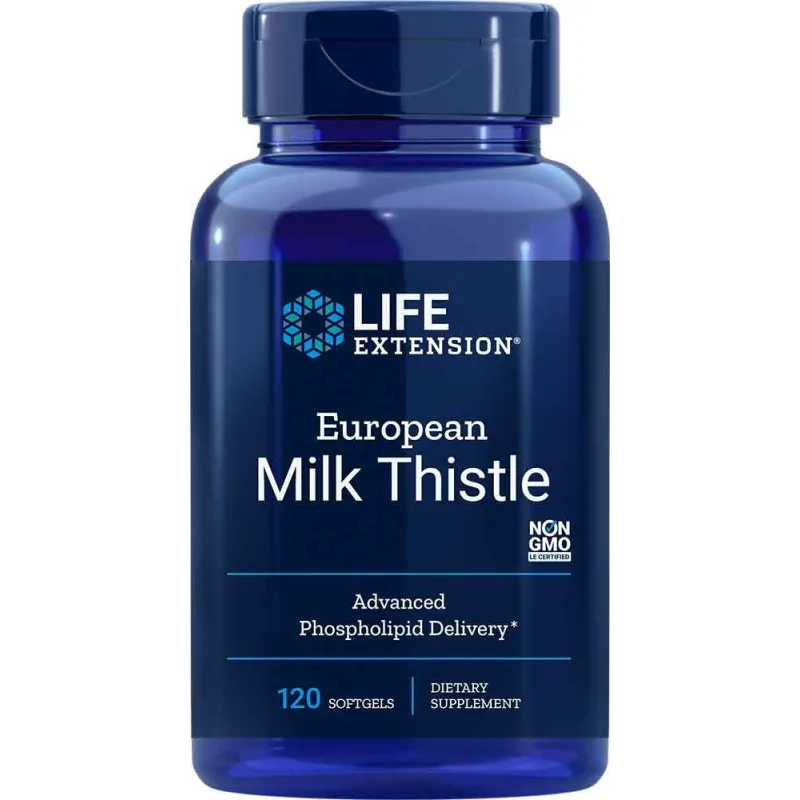
Advanced Milk Thistle
120 softgels
Item Catalog Number: 01925
Benefits at a Glance
Modern living puts a heavy load on the liver, making it critical to proactively maintain liver health. That’s where hepato-protective herbs such as milk thistle come in. Milk thistle contains antioxidants that support not only liver health, but overall health.1-3
Silymarin is extracted from milk thistle. This extract is a powerful free radical scavenger that promotes healthy liver function in its own right.4-10 Advanced extraction technology has now allowed us to isolate other constituents within the silymarin extract itself and test their ability to support liver health and beyond.
Silibinin is another compound present in our high-quality milk thistle extract. Made up of silybins A and B, it is the most biologically active flavonolignan component found in milk thistle extract. Its beneficial effects on the liver have been shown in pre-clinical and clinical studies.8,11 Other milk thistle extracts called isosilybin A and B have proven to be the most efficient at helping to maintaining healthy cell division.12,13
The main bioactive compound of milk thistle, called silybin, does not dissolve well in water.14 This makes it difficult for the body to absorb all of it.14,15 Scientists have overcome silybin’s poor bioavailability by integrating it into a phytosome. A phytosome is a tiny sphere made out of plant-derived phosphatidylcholine.
This phosphatidylcholine-based delivery system facilitates transportation across the intestinal lining into the bloodstream, making it an ideal carrier molecule for silybin.8,15,16 Scientists believe that phosphatidylcholine molecularly bonds to silybin, helping to steer it through the cell membranes in the intestinal tract.15 This improves the delivery of the benefits of milk thistle extracts for liver health.
Preclinical and clinical evidence showed that this silybin-phosphatidylcholine complex resulted in almost 5-fold greater concentrations of silybin in the bloodstream than unformulated silymarin, and its ultimate bioavailability to the liver, its target organ, is up to 10-fold greater than unformulated silymarin.17-19
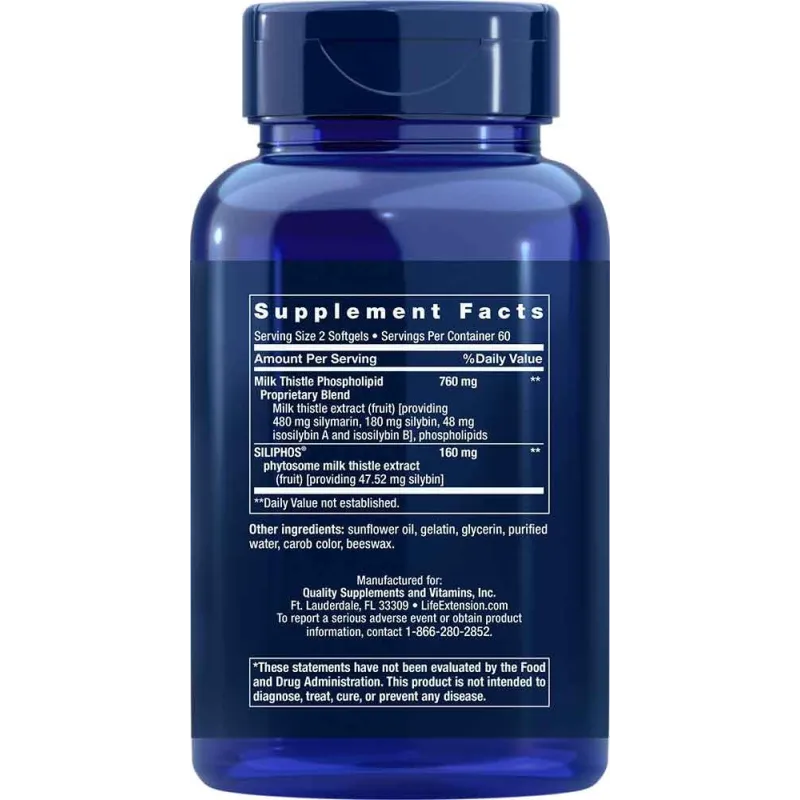
Serving Size 2 softgels
Servings Per Container 60
| Amount Per Serving | |
|---|---|
| Milk Thistle Phospholipid Proprietary Blend Milk thistle extract (fruit) [providing 480 mg silymarin, 180 mg silybin, 48 mg isosilybin A and isosilybin B], phospholipids |
760 mg |
| SILIPHOS® phytosome milk thistle extract (fruit) [providing 47.52 mg silybin] | 160 mg |
| Other ingredients: sunflower oil, gelatin, glycerin, purified water, carob color, beeswax. | |
Contains Soybeans
SILIPHOS® is a registered trademark of Indena S.p.A., Italy.
Dosage and Use
Take two (2) softgels daily, in divided doses, with or without food, or as recommended by a healthcare practitioner.
Warnings
KEEP OUT OF REACH OF CHILDREN
DO NOT EXCEED RECOMMENDED DOSE
Do not purchase if outer seal is broken or damaged.
When using nutritional supplements, please consult with your physician if you are undergoing treatment for a medical condition or if you are pregnant or lactating.
34,25 €
15,31 €
28,41 €
24,87 €
Standard milk thistle extract faces a critical limitation—silymarin, the active complex containing silybin and other flavonolignans, demonstrates poor bioavailability with only 20-30% oral absorption and rapid metabolism limiting therapeutic concentrations. Advanced formulations overcome this through phospholipid complexation technology, most commonly using phosphatidylcholine to create "phytosome" complexes. This innovative delivery dramatically enhances silymarin pharmacokinetics: bioavailability increases 300-500% compared to standard extracts, peak plasma concentrations rise 4-6 fold, and tissue accumulation (particularly in liver) improves substantially. The mechanism involves phospholipids serving as molecular "chaperones"—they enhance silymarin solubility in both aqueous and lipid environments, protect against premature breakdown in digestive tract, and facilitate absorption across intestinal membranes through incorporation into mixed micelles. Clinical studies comparing phospholipid-complexed silymarin versus standard extract show superior liver enzyme reduction (ALT and AST decrease by 40-60% versus 20-30%), enhanced antioxidant effects measured by reduced markers of lipid peroxidation, and better clinical outcomes in liver disease patients. This enhanced delivery means lower doses of advanced formulations produce effects equivalent to much higher doses of standard extract—120-240 mg phospholipid-complexed silymarin equals 300-600 mg standard silymarin. For individuals with significant liver concerns or those not responding to standard milk thistle, advanced formulations provide the enhanced potency necessary for meaningful hepatoprotection.
Milk thistle provides comprehensive hepatoprotection through multiple complementary mechanisms addressing different aspects of liver health and injury. The primary mechanism involves potent antioxidant activity—silymarin components neutralize free radicals and lipid peroxidation products that damage hepatocyte membranes, while upregulating endogenous antioxidant systems including glutathione, superoxide dismutase, and catalase by 30-50%. This antioxidant protection proves crucial as liver constantly faces oxidative stress from toxin metabolism. Milk thistle stabilizes hepatocyte cell membranes preventing toxin entry and damage—it alters membrane phospholipid composition increasing resistance to toxic compounds, particularly critical for preventing alcohol, acetaminophen, and environmental toxin-induced liver injury. The herb demonstrates remarkable anti-inflammatory properties, inhibiting inflammatory cytokines and NF-κB signaling that drive hepatic inflammation and fibrosis progression. Research shows 25-40% reductions in inflammatory markers in liver disease patients. Milk thistle stimulates protein synthesis and hepatocyte regeneration—it enhances ribosomal RNA production accelerating new hepatocyte formation to replace damaged cells, supporting liver repair after injury. The compound also provides anti-fibrotic effects inhibiting stellate cell activation and collagen deposition that cause cirrhosis, potentially slowing or preventing fibrosis progression. Clinical validation demonstrates milk thistle reduces elevated liver enzymes (ALT, AST) by 25-60% depending on formulation and underlying condition, improves liver histology showing reduced inflammation and fibrosis, and enhances liver function tests in various liver diseases including fatty liver, hepatitis, and cirrhosis.
Milk thistle demonstrates clinical benefits across diverse liver conditions though response varies by disease severity and formulation. Non-alcoholic fatty liver disease (NAFLD)—affecting 25% of adults globally—responds favorably to milk thistle with studies showing 20-40% reductions in liver fat measured by ultrasound or MRI, 25-35% decreases in liver enzyme elevations, and improvements in insulin sensitivity contributing to underlying metabolic dysfunction. For alcoholic liver disease, milk thistle provides protective benefits though cannot reverse advanced cirrhosis—it reduces progression risk, improves liver function tests, and may reduce mortality in cirrhotic patients when combined with alcohol cessation. Viral hepatitis patients show variable responses: hepatitis C demonstrates modest benefits with liver enzyme reductions and potentially slowed fibrosis progression, while hepatitis B shows limited direct antiviral activity but valuable hepatoprotection during active disease. Drug-induced liver injury from medications like acetaminophen, statins, chemotherapy, or psychiatric medications benefits from milk thistle's protective effects—prophylactic use may prevent toxicity while treatment use supports recovery. Individuals exposed to environmental hepatotoxins (industrial chemicals, mold mycotoxins, heavy metals) gain protection from milk thistle's membrane-stabilizing and antioxidant effects. For liver health maintenance in healthy individuals, milk thistle provides general hepatoprotection valuable for those with: family history of liver disease, regular alcohol consumption, obesity and metabolic syndrome, medication use with hepatotoxic potential, or occupational chemical exposure.
Milk thistle enhances liver detoxification capacity through multiple mechanisms supporting both Phase I and Phase II detoxification pathways. The liver processes toxins through two main phases: Phase I (cytochrome P450 enzymes) oxidizes toxins making them water-soluble, while Phase II (conjugation reactions) attaches molecules like glutathione, sulfate, or glucuronic acid facilitating excretion. Milk thistle's most significant detoxification benefit involves glutathione support—it increases hepatic glutathione synthesis by 30-50%, critical as glutathione serves as the primary Phase II conjugation molecule and major cellular antioxidant. This glutathione enhancement proves particularly valuable during toxic exposures requiring extensive conjugation capacity. The compound also modulates cytochrome P450 activity, inhibiting certain isoforms potentially reducing activation of protoxins to toxic metabolites, while supporting Phase II enzyme activity. Beyond detoxification, milk thistle demonstrates metabolic health benefits increasingly appreciated in research. Studies show improvements in insulin sensitivity with 15-25% reductions in fasting glucose and insulin resistance in individuals with metabolic syndrome or type 2 diabetes. Lipid profiles improve with 10-20% reductions in total cholesterol, LDL, and triglycerides, attributed to effects on hepatic lipid metabolism. The anti-inflammatory effects extend beyond liver to systemic inflammation—CRP and inflammatory cytokine levels decrease by 20-35%. These metabolic benefits make milk thistle valuable not just for liver disease but as component of comprehensive metabolic health optimization, particularly for individuals with fatty liver disease where metabolic dysfunction and hepatic steatosis reinforce each other.
Milk thistle dosing depends on formulation type and therapeutic goals. Standard milk thistle extract (70-80% silymarin) requires 300-600 mg daily divided into 2-3 doses, with higher end (600 mg) used for active liver disease and lower doses (300 mg) for maintenance support. Advanced phospholipid-complexed silymarin demonstrates superior bioavailability allowing lower effective doses: 120-240 mg daily (equivalent to 300-600 mg standard extract) typically divided into two doses. Taking milk thistle with meals, particularly those containing some fat, enhances absorption of fat-soluble silymarin components. Effects develop progressively rather than immediately—liver enzyme improvements emerge over 4-8 weeks, optimal hepatoprotective benefits require 8-12 weeks, and anti-fibrotic effects manifest over months of consistent use. For acute hepatoprotection (medication-induced injury, toxin exposure), higher doses (600 mg standard or 240 mg enhanced) provide maximum protective capacity. Maintenance liver health support uses moderate doses (300 mg standard or 120 mg enhanced) long-term. Combining milk thistle with other liver-supporting nutrients enhances benefits: N-acetylcysteine provides complementary glutathione support, alpha-lipoic acid offers additional antioxidant protection, B vitamins support methylation and detoxification, and artichoke or dandelion enhance bile production and flow. The excellent safety profile supports long-term continuous use without cycling requirements—milk thistle demonstrates no serious adverse effects even with years of daily supplementation. Mild effects like digestive upset occur occasionally, resolved by taking with food or reducing dose.
Results: Clinical trials demonstrate phospholipid-complexed silymarin increases bioavailability by 300-500% with 4-6 fold higher peak plasma concentrations compared to standard extracts, producing superior liver enzyme reductions of 40-60% versus 20-30% with standard formulations.
Citation: Barzaghi N, et al. Eur J Drug Metab Pharmacokinet. 1990 Oct-Dec;15(4):333-8.
Results: Research shows milk thistle reduces liver fat by 20-40% in NAFLD patients, decreases liver enzymes ALT and AST by 25-60%, and improves insulin sensitivity by 15-25% through effects on hepatic and systemic metabolism.
Citation: Abenavoli L, et al. World J Gastroenterol. 2010 Jun;16(22):2713-22.
Results: Studies reveal silymarin increases hepatic glutathione synthesis by 30-50%, upregulates antioxidant enzyme activity, and reduces lipid peroxidation markers by 25-40% providing comprehensive antioxidant hepatoprotection.
Citation: Pradhan SC, et al. Phytother Res. 2006 Jul;20(7):519-29.
Results: Long-term trials show milk thistle demonstrates anti-fibrotic properties slowing cirrhosis progression, reduces hepatic inflammation by 25-40%, and improves survival in cirrhotic patients when combined with standard treatment.
Citation: Saller R, et al. Drugs. 2001;61(14):2035-63.