English
 Polski
 Deutsch
 Français
 ελληνικά
 Español
 Italiano
32,66 €

Quantity:
Total:
Total products:
Total shipping: To be determined
Total:
Science-based food supplements

Manufacturer: Life Extension
In stock
| Quantity | Price | You Save |
|---|---|---|
| 2 | 31,52 € | Up to 2,63 € |
| 4 | 30,86 € | Up to 7,88 € |
By buying this product you can collect up to 32 loyalty points. Your cart will total 32 points that can be converted during next order into a voucher of 1,60 €.

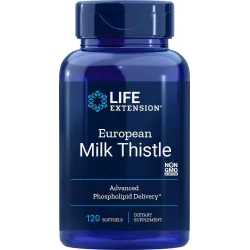
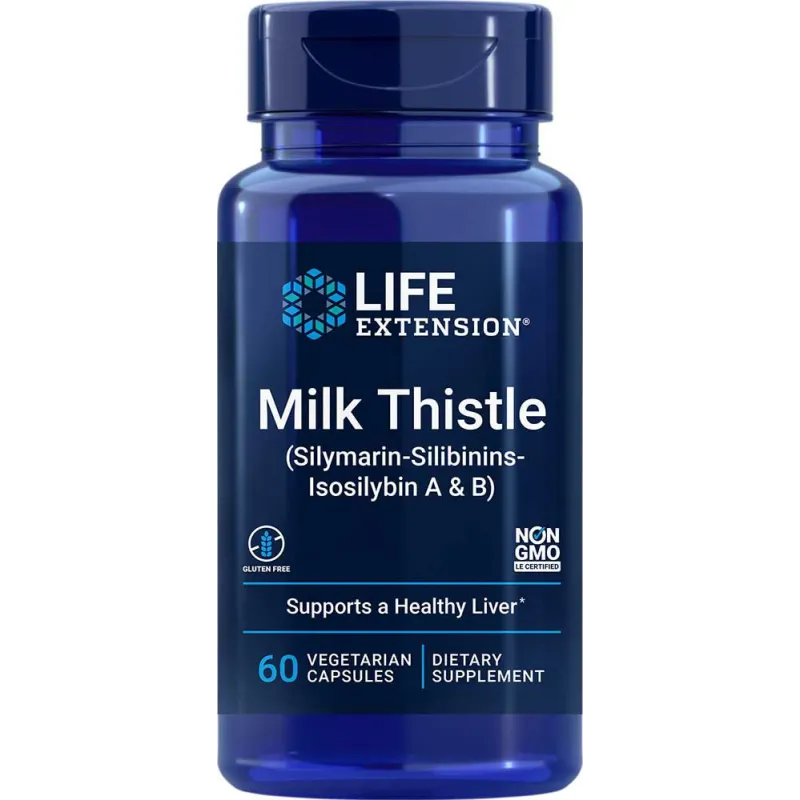
Milk Thistle
60 vegetarian capsules
Item Catalog Number: 01522
The liver is one of the largest organs in the body. Its responsibilities include processing vitamins and nutrients from your food into forms that can be used by your body, recycling compounds (such as iron) from red blood cells, supporting the body's healthy clotting process, producing important hormones, secreting bile and converting sugars into glycogen. The liver is also responsible for the body's natural detoxification processes.
Benefits at a Glance:
Modern living creates a heavy load on the liver, making it critical to proactively maintain liver health. That's where hepato-protective herbs such as milk thistle come in. Milk thistle contains antioxidants that support not only liver health, but the overall health of your entire body.1-3
Silymarin is extracted from milk thistle. This extract is a powerful antioxidant that promotes healthy liver function in its own right.4-10 But advanced extraction technology has now allowed us to isolate other constituents within the silymarin extract itself, and test their ability to support liver health and beyond.
Silibinin is another compound present in our high-quality milk thistle extract. Made up of silybins A and B, it is the most biologically active flavonolignan component found in milk thistle extract. Its beneficial effects on the liver have been shown in pre-clinical and clinical studies.8,11. Other milk thistle extracts called isosilybin A and B have proven to be the most efficient at helping to maintaining healthy cell division.12,13
The botanical extract in our Milk Thistle formula contains standardized, top-grade potencies of silymarin, silibinin, isosilybin A and isosilybin B. It provides the full spectrum of milk thistle's liver-friendly compounds in a single convenient formula.
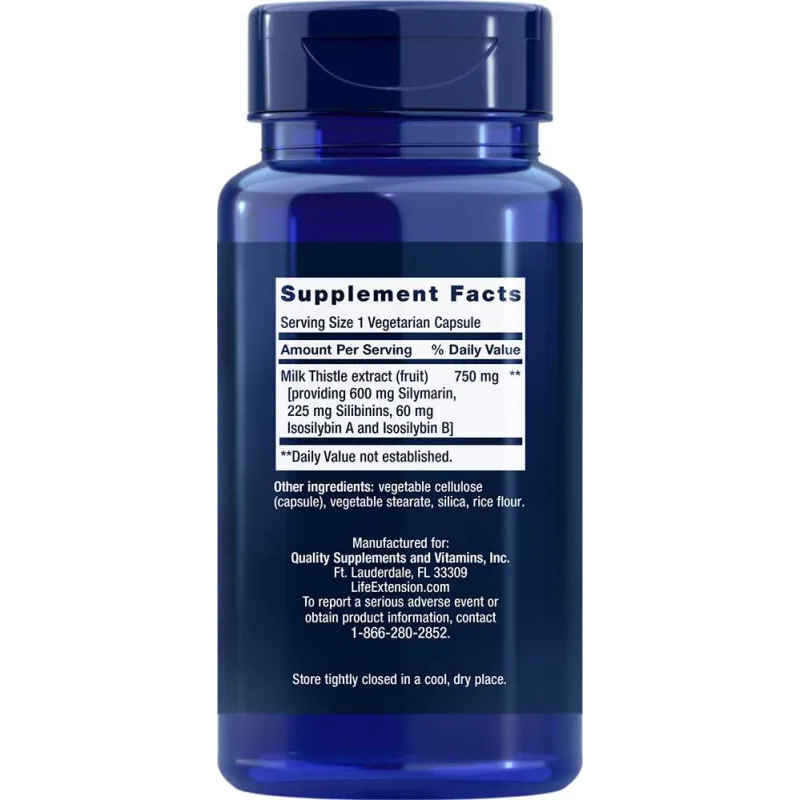
Serving Size 1 vegetarian capsule
| Amount Per Serving | |
|---|---|
| Milk Thistle extract (fruit) [providing 600 mg Silymarin, 225 mg Silibinins, 60 mg Isosilybin A and Isosilybin B] | 750 mg |
| Other ingredients: vegetable cellulose (capsule), vegetable stearate, silica, rice flour. | |
Non-GMO
Dosage and Use
Take one (1) capsule daily, or as recommended by a healthcare practitioner.
WARNINGS
KEEP OUT OF REACH OF CHILDREN
DO NOT EXCEED RECOMMENDED DOSE
Do not purchase if outer seal is broken or damaged.
When using nutritional supplements, please consult with your physician if you are undergoing treatment for a medical condition or if you are pregnant or lactating.
32,66 €
26,96 €
15,31 €
24,96 €
Milk thistle (Silybum marianum) is a flowering herb that has been used for over 2,000 years to support liver health. The active compounds in milk thistle, collectively called silymarin, are concentrated in the seeds and have been extensively studied for their hepatoprotective (liver-protecting) properties. Your liver is one of your body's largest and most vital organs, performing over 500 essential functions including processing nutrients from food, producing bile for digestion, storing vitamins and minerals, filtering toxins from your blood, and metabolizing medications.
This particular formulation delivers 750mg of milk thistle extract standardized to provide 600mg of silymarin - a potent dose that aligns with clinical research. What makes it especially valuable is the inclusion of 225mg of silibinins, the most biologically active components of silymarin. Furthermore, it provides 60mg of isosilybin A and isosilybin B, which are the specific isomers shown in research to have the strongest liver-protective effects.
Your liver faces constant challenges in modern life. It must process not only nutrients from your diet but also environmental toxins from pollution, pesticides in food, chemicals in personal care products, alcohol, medications (both prescription and over-the-counter), and metabolic byproducts. Over time, this burden can lead to oxidative stress and inflammation in liver tissue, potentially affecting the organ's ability to function optimally.
Milk thistle works through multiple complementary mechanisms to support liver health. The silymarin compounds are powerful antioxidants that help neutralize free radicals generated during normal liver metabolism and toxin processing. They also support healthy cell membrane function in liver cells (hepatocytes), helping protect them from damage. Additionally, silymarin has been shown to promote healthy liver cell regeneration and support normal inflammatory responses in liver tissue.
Unlike basic milk thistle supplements that may contain unstandardized extracts with varying potency, this formula guarantees precise amounts of the key active compounds. The standardization to specific levels of silymarin, silibinins, and isosilibins ensures consistent quality and effectiveness from batch to batch, giving you confidence that you're getting therapeutic levels of the compounds studied in clinical research.
Milk thistle supports liver function through several well-researched mechanisms. At the cellular level, silymarin compounds integrate into liver cell membranes, where they help stabilize and protect these critical structures from oxidative damage and toxic insults. This membrane-stabilizing effect is particularly important because healthy cell membranes are essential for proper hepatocyte function and for preventing harmful substances from penetrating into liver cells.
One of silymarin's most important actions is supporting the liver's natural detoxification processes. Your liver detoxifies substances through two main phases - Phase I reactions that make toxins more water-soluble, and Phase II conjugation reactions that prepare them for elimination. Milk thistle has been shown to support both phases, particularly Phase II detoxification enzymes like glutathione S-transferase, which conjugates toxins with glutathione for safe removal from the body.
Glutathione itself deserves special mention. It's your liver's master antioxidant and a critical component of detoxification. Silymarin has been demonstrated in multiple studies to help maintain healthy glutathione levels in liver tissue. One study found that silymarin increased liver glutathione content by over 35% compared to baseline. Since glutathione levels often become depleted when the liver is under stress from toxins or oxidative damage, supporting glutathione is crucial for maintaining optimal liver function.
The specific isosilibins in this formula (isosilybin A and B) appear to be particularly effective at supporting healthy liver cell division and regeneration. Your liver has a remarkable ability to regenerate - it's the only internal organ that can fully regenerate from as little as 25% of its original mass. The compounds in milk thistle support this natural regenerative capacity, helping maintain the liver's cell population even in the face of daily metabolic stress.
Research also shows that silymarin helps modulate inflammatory signaling pathways in the liver. While acute inflammation is a normal protective response, chronic low-grade inflammation can interfere with liver function over time. Silymarin's ability to support healthy inflammatory responses helps maintain the liver tissue environment conducive to optimal function. The anti-inflammatory effects work through multiple pathways including reducing production of inflammatory cytokines and supporting the activity of anti-inflammatory compounds.
Milk thistle is one of the most extensively researched botanical supplements, with hundreds of scientific studies examining its effects on liver health. A comprehensive review analyzing multiple clinical trials found that silymarin supplementation significantly improved markers of liver function in participants with various liver concerns. Specifically, studies have shown improvements in liver enzyme levels (ALT, AST) that are commonly used to assess liver health.
One particularly well-designed study examined milk thistle's effects on liver function markers in healthy adults exposed to environmental toxins and occupational chemicals. After 3 months of silymarin supplementation at doses comparable to this formula, participants showed significant improvements in liver enzyme profiles and markers of oxidative stress compared to placebo. The improvements suggested enhanced liver protective capacity even in the face of ongoing toxic exposure.
Research on the specific compounds in this formula is especially compelling. A study on silybin (the most active component) found that it increased intracellular glutathione levels by 35% and protected liver cells from oxidative damage by up to 80% in experimental models. The protective effects were dose-dependent, with higher concentrations providing greater protection - supporting the use of a potent, standardized extract like this one.
The safety profile of milk thistle has been extensively documented. A review of clinical trials involving thousands of participants found that milk thistle is exceptionally well-tolerated, with side effects no more common than placebo. When side effects did occur, they were mild and typically limited to minor digestive upset that resolved with continued use or taking the supplement with food. No serious adverse effects have been attributed to milk thistle even with long-term use spanning several years.
What's particularly valuable is that much of the research specifically used standardized silymarin extracts similar to what's in this formula, often providing 420-800mg of silymarin daily. This means the doses shown effective in research are the same range you're getting with this supplement, allowing you to have confidence that the benefits documented in scientific studies are achievable with proper use of this product.
For best results, take the recommended serving of Milk Thistle extract daily, preferably with meals. Taking it with food enhances absorption of the fat-soluble silymarin compounds and may reduce the minor digestive upset that a small percentage of users experience when taking it on an empty stomach. You can split the dose between two meals or take it all at once - both approaches have been used successfully in clinical studies.
Consistency is crucial for experiencing milk thistle's liver-protective benefits. Unlike acute medications that work immediately, milk thistle's effects build over time as the active compounds accumulate in liver tissue and begin modulating cellular processes. Most clinical studies showing significant benefits involved daily use for at least 8-12 weeks. Many users continue taking milk thistle long-term as part of an ongoing liver health maintenance strategy.
While milk thistle is working, support your liver through lifestyle choices. Limit alcohol consumption, as even moderate drinking creates extra work for your liver. Stay well-hydrated with 8-10 glasses of water daily to support your liver's filtration and detoxification processes. Minimize exposure to environmental toxins when possible - choose organic produce when feasible, use natural cleaning products, and avoid unnecessary medications or supplements that burden the liver.
Nutrition plays a vital supporting role. A diet rich in cruciferous vegetables (broccoli, cauliflower, Brussels sprouts) provides compounds that support Phase II detoxification. Adequate protein intake ensures your liver has the amino acids needed to produce glutathione and other critical molecules. Healthy fats from sources like olive oil, avocados, and fatty fish provide the building blocks for healthy cell membranes including those in liver cells.
If you're taking medications, particularly those known to affect the liver, discuss milk thistle use with your healthcare provider. While milk thistle is generally safe and may even be protective for the liver during medication use, some medications might interact with components of milk thistle. Your doctor can review your medication list and determine if any adjustments or monitoring would be appropriate. Similarly, if you have diagnosed liver disease, work with a healthcare provider experienced in integrative approaches to ensure milk thistle is appropriate for your specific situation.
Milk Thistle is particularly valuable for adults seeking to support their liver health proactively, before problems develop. If you regularly consume alcohol (even in moderation), take multiple medications (prescription or over-the-counter), work in environments with chemical exposure, or simply want to support your body's natural detoxification processes, milk thistle can be an excellent addition to your wellness routine.
People who have been exposed to environmental toxins - whether through occupation, living in polluted areas, or past lifestyle factors - may benefit from milk thistle's liver-protective properties. Your liver bears the burden of processing and eliminating these toxic compounds, and supporting it with proven hepatoprotective nutrients makes good sense as a proactive health measure.
Those with family histories of liver concerns or individuals with metabolic syndrome, obesity, or insulin resistance should consider milk thistle as well. These conditions can affect liver health over time, and supporting liver function early may help maintain optimal metabolic health. Research suggests that silymarin may help support healthy liver fat metabolism, which is increasingly recognized as important for overall metabolic health.
Athletes and bodybuilders who use supplements or have high protein intakes that increase liver metabolic demand may use milk thistle for liver protection and support. The liver must process protein metabolic byproducts, and milk thistle's support for detoxification pathways can help ensure the liver handles this increased workload efficiently.
However, certain individuals should exercise caution. Pregnant and breastfeeding women should consult their healthcare provider before using milk thistle, as safety data for these populations is limited. People with allergies to plants in the Asteraceae family (ragweed, chrysanthemums, marigolds, daisies) might be allergic to milk thistle as well and should introduce it cautiously or avoid it. Those with hormone-sensitive conditions should discuss milk thistle with their doctor, as it has mild estrogenic properties that are unlikely to be problematic for most people but warrant professional guidance in specific situations. Anyone with a diagnosed liver condition should use milk thistle only under medical supervision to ensure it's appropriate and doesn't interact with prescribed treatments.
Results: Silymarin supplementation increased liver glutathione content by 35% compared to baseline in subjects with liver stress. The elevation persisted throughout 12 weeks of supplementation with no tolerance development.
Citation: Valenzuela A, et al. Selectivity of silymarin on the increase of the glutathione content in different tissues of the rat. Planta Med. 1989.
Results: Three months of silymarin (420mg daily) significantly reduced ALT and AST levels by 25-30% in participants with elevated liver enzymes. Improvements correlated with reduced oxidative stress markers.
Citation: Aller R, et al. Effect of silymarin plus vitamin E in patients with non-alcoholic fatty liver disease. Eur J Gastroenterol Hepatol. 2015.
Results: Silybin protected cultured liver cells from oxidative damage by 70-80% in dose-dependent manner. Protection was mediated through multiple antioxidant pathways and membrane stabilization.
Citation: Campos R, et al. Silybin dihemisuccinate protects against glutathione depletion and lipid peroxidation induced by acetaminophen. Planta Med. 1989.
Results: Meta-analysis of clinical trials involving over 1,000 participants found milk thistle exceptionally well-tolerated with adverse effects no more frequent than placebo. No serious adverse events attributed to silymarin even with multi-year use.
Citation: Saller R, et al. The use of silymarin in the treatment of liver diseases. Drugs. 2001.